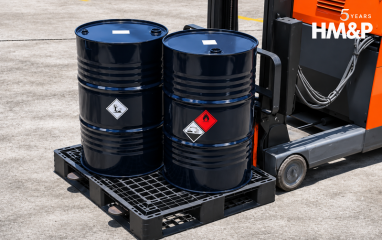
From 2026, the import of chemicals requiring special control in Vietnam will be regulated according to the framework of the 2025 Chemical Law and its guiding documents. Businesses need to correctly identify the chemical name, CAS code, composition, content, import purpose, and specialized management regime before signing contracts or placing orders. Being listed in the control list does not mean that all import activities are permitted after being licensed. This article will clarify the conditions, procedures, and compliance risks that need to be noted to limit delays in customs clearance and disruptions to production and business activities.
Containing the same chemical component, two imported goods may have different declaration obligations depending on the classification of goods. Even raw materials that have been controlled under specialized laws can still lead to debates about declaration obligations during customs clearance. This practice raises the question: has the new exemption mechanism truly helped businesses clearly identify legal obligations and reduce duplicate procedures?
In order to assist foreign investors in making a preliminary assessment of their ability to access the Vietnamese market, HM&P Law Firm (“HM&P”) has compiled this document on the basis of a consolidation of Vietnam's international commitments and the relevant Vietnamese laws. The document may also serve as a reference source for enterprises, lawyers and professionals in researching and assessing investment structures in Vietnam.
From December 5, 2026, Decree 393/2026/ND-CP (Decree 393), replacing Decree 219/2025/ND-CP (Decree 219), and related regulations in Resolution 24/2026/NQ-CP on foreign labor will officially take effect. The new adjustments open up more opportunities to accept foreign personnel, especially professional positions, but also require businesses to more strictly manage the records and legal status of workers throughout their employment in Vietnam.
The regulation allowing foreign investors to establish enterprises before being granted an Investment Registration Certificate is a step forward in reforming investment procedures. However, how to contribute capital to enterprises that have been established but do not have investment projects? This seemingly technical problem shows that procedural reform is only really effective when regulations on investment, enterprises and foreign exchange management are implemented synchronously.
The Draft Decree replacing Decree 162/2018/ND-CP on sanctioning administrative violations in the field of civil aviation (Draft) is setting new requirements for businesses. Notably, the biggest impact may not lie in the level of fines, but in the fact that many daily operations are specifically identified as violations, forcing businesses to change the way they manage and comply.
A product that is allowed to be circulated in Vietnam does not mean that an enterprise is allowed to advertise that product in any content or method. The amended Law on Advertising (Law on Advertising) has come into effect from January 1, 2026 along with Decree No. 342/2025/ND-CP (Decree 342) placing advertising activities within a stricter management framework, in addition to the specialized requirements that have been applied.