


From 2026, the import of chemicals requiring special control in Vietnam will be regulated according to the framework of the 2025 Chemical Law and its guiding documents. Businesses need to correctly identify the chemical name, CAS code, composition, content, import purpose, and specialized management regime before signing contracts or placing orders. Being listed in the control list does not mean that all import activities are permitted after being licensed. This article will clarify the conditions, procedures, and compliance risks that need to be noted to limit delays in customs clearance and disruptions to production and business activities.
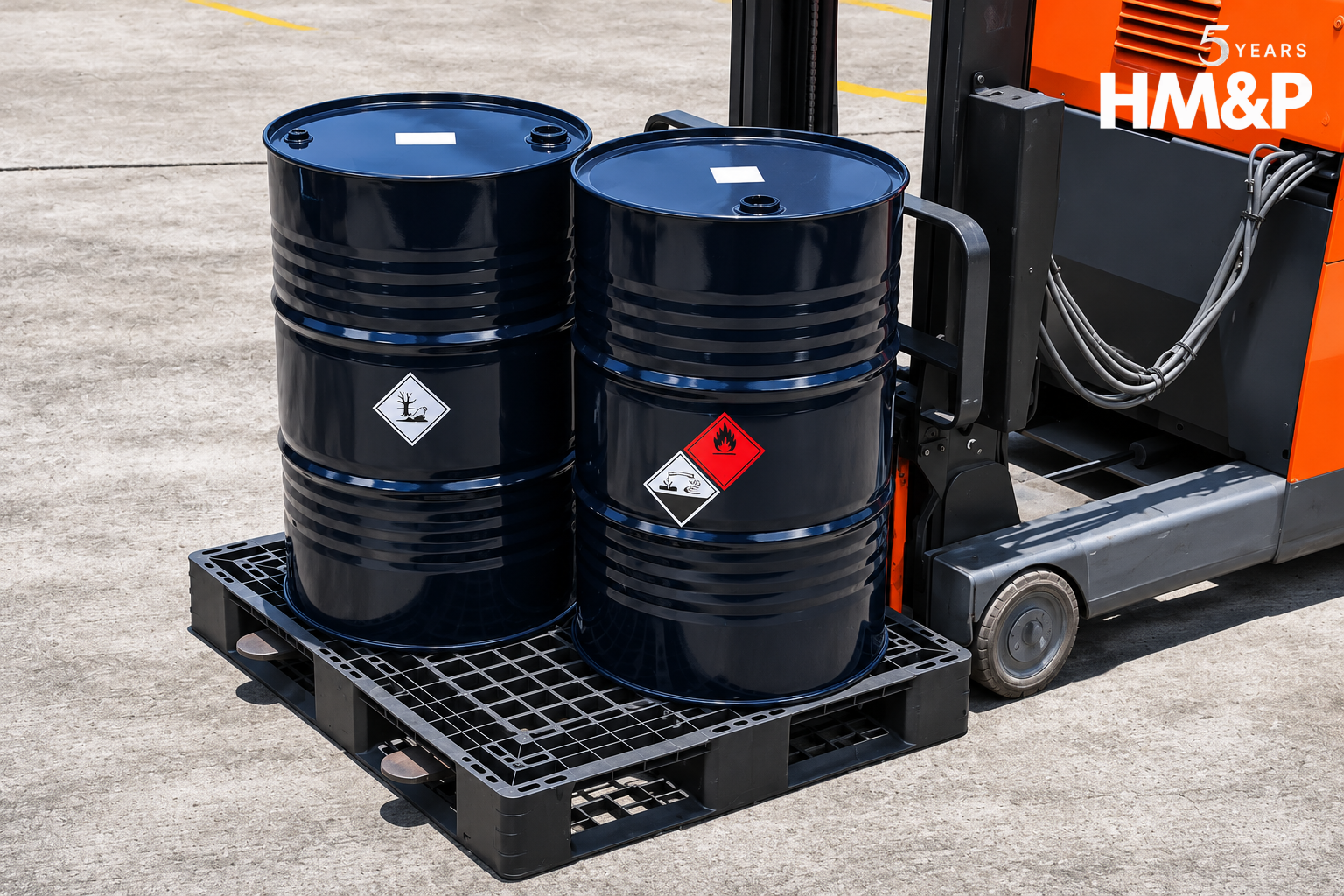
The exemption must be considered according to the scope, conditions, and exceptions of the current legal document; license exemption does not mean exemption from other chemical management, declaration, or safety obligations.
1. What is the import license for chemicals requiring special control in group 2?
The import license for chemicals requiring special control in group 2 is a document issued by a competent state agency, allowing organizations or individuals to import chemicals in group 2 of the List of chemicals requiring special control according to the type, quantity, and validity period stated on the license. The license is valid for 06 months from the date of issuance and can be renewed once according to the conditions, procedures, and processes prescribed by law. Having a license does not replace other conditions and obligations of specialized management.
2. When must a permit be applied for and in which cases is it exempted?
2.1. Determining the categories requiring a license. First, businesses need to compare the chemical name, CAS code,[1] and composition of the goods with group 2 in Appendix III of Decree No. 24/2026/ND-CP[2]; then determine the import purpose and check for cases exempt from permits. At the same time, they must review regulations on banned, restricted, or other specialized management mechanisms. It is not possible to rely solely on HS codes or trade names to make conclusions.
2.2. Cases of license exemption. The exemption must be considered according to the scope, conditions, and exceptions of the current legal document; license exemption does not mean exemption from other chemical management, declaration, or safety obligations.
Businesses need to keep records to compare chemical names, CAS codes, ingredients, and actual content (especially for mixtures), along with the Chemical Safety Data Sheet (SDS) and technical documents provided by the supplier.
The basis for license exemption must be compared with Article 21 of Decree No. 26/2026/ND-CP and related amendments, supplements, or special regulations, including Resolution No. 19/2026/NQ-CP, within the scope still in effect and applicable to specific procedures.
The following groups of cases need to be evaluated separately according to legal conditions:
- Mixtures containing chemicals requiring special control in group 2 with content not exceeding 5% by weight of the mixture, within the scope of license exemption as stipulated in Resolution No. 19/2026/NQ-CP; documents determining composition and content are required.
- Chemicals available in finished products are specifically listed by law; the exemption does not extend to all pharmaceuticals, cosmetics, fertilizers, paints, inks, detergents, fuels, or batteries.
- Chemicals used for testing within the quantitative limits specified in the applicable document. It is necessary to verify thresholds, units of measurement, and specific conditions on the official document before applying them to each shipment.
- On-the-spot import or transactions between domestic enterprises and enterprises in separate customs zones, if fully meeting the conditions for license exemption as prescribed.
3. Conditions for import activities for business purposes and self-use
|
|
Import for business purposes |
Imported for self-use |
|---|---|---|
|
Subject |
Organization |
Organizations, individuals |
|
Requirements |
Has a business license for chemicals requiring special control |
It is necessary to create an account and publish the type of chemical and its intended use in the specialized chemical database according to applicable regulations. It is necessary to separately check the announcement timing before applying for a license and require the announcement before the first use; these two time frames are not consistent. |
|
Legal basis |
Clause 3, Article 12 of the 2025 Chemical Law |
Clause 3, Article 14, Article 15 of Decree No. 26/2026/ND-CP |
4. Dossier, authority, and time limit for resolution
|
No. |
Content |
Detailed information |
|---|---|---|
|
Licensing authority |
Provincial People's Committee |
|
|
|
Agencies receiving and processing dossiers |
The Department of Industry and Trade or the focal point assigned, delegated, or authorized by the locality shall receive and process the dossier according to the administrative procedures announced at the time of submission. |
|
Application submission method[3] |
|
|
|
Required documents[4] |
Number of application sets: 01 set The dossier includes:
Note: In cases where organizations or individuals import chemicals for use, they must create an account in the specialized chemical database and declare the type of chemical and its intended use before applying for the license[5]. |
|
|
Fees and charges[6] |
Free of charge (according to the published administrative procedure information; recheck at the time of submission) |
|
|
Processing time[7] |
|
|
|
Results[8] |
|

5. Practical notes when carrying out import procedures
5.1. Correctly determine management regimes before import. From the stage of supplier selection and contract negotiation, businesses need to identify chemical names, CAS codes, ingredients, content, SDS, and intended use; at the same time, review exemptions and prohibitions or restrictions according to international conventions or specialized laws. Chemicals listed in group 2 should not be considered as permitted for import.
5.2. Distinguishing the purpose of import. Enterprises importing for distribution must check the conditions for trading chemicals requiring special control. Enterprises importing as raw materials for internal production need to review the obligation to declare chemical types and purposes in the specialized chemical database. The timing of announcement before applying for a license and the deadline before the first use are two requirements that require independent inspection according to applicable regulations.
5.3. Ensure consistent documentation. Cross-check chemical names, CAS codes, types, quantities, and importer information on the application, commercial invoice, SDS, and documents proving operational conditions. If there are changes in documents or license content, enterprises need to determine procedures for adjustment, reissuance, or new license application before customs procedures.
5.4. Proactively monitor the progress and validity of the license. The processing time is only counted from when the dossier is complete and valid and does not include the time the enterprise supplements the dossier. Enterprises need to check the processing time announced locally, prepare translations, and estimate the processing time; if the import is not completed when the license is about to expire, it is necessary to check the conditions and timing of submitting the extension dossier.
5.5. Post-clearance compliance. The import license does not replace obligations regarding preservation, chemical safety, management and use, document storage, and reporting as required. The purchasing, logistics, legal, and chemical safety departments should coordinate control from ordering to commissioning chemicals.
Compliance with regulations on the import of specially controlled chemicals in group 2 is not just about completing the licensing application. Businesses need to correctly determine the management regime for each chemical, meet conditions corresponding to the import purpose, and maintain post-clearance obligations. Legal review from the stage of supplier selection, contract negotiation, and import planning will help limit customs clearance delays, production disruptions, and risks of violating specialized regulations.

Compliance with regulations on the import of specially controlled chemicals in group 2 is not just about completing the licensing application.
[1] CAS - Chemical Abstracts Service: is a unique identification number sequence assigned by the Chemical Abstracts Service (under the American Chemical Society) to each chemical substance, compound, polymer, mixture, alloy, or biological chain.
[2] See the detailed list here: https://datafiles.chinhphu.vn/cpp/files/vbpq/2026/4/24-ndcp.signed.pdf.
[3] Point a, Clause 6, Article 14 of Decree No. 26/2026/ND-CP.
[4] Clause 5, Article 14 of Decree No. 26/2026/ND-CP. The documents specified in point d (reporting for group 1 chemicals), point đ (export of self-produced chemicals), and point g (export of Schedule 3 chemicals) do not apply to cases of importing chemicals requiring special control in group 2.
[5] Clause 3, Article 12 of the Chemical Law No. 69/2025/QH15; Clause 3, Article 14 and Article 15 of Decree No. 26/2026/ND-CP.
[6] Procedures free of charges (information publicly available on the National Public Service Portal).
[7] Points b and c, Clause 6, Article 14 of Decree No. 26/2026/ND-CP.
[8] Points c and đ, Clause 6 and Clause 9, Article 14 of Decree No. 26/2026/ND-CP; Clause 4, Article 12 of the Chemical Law No. 69/2025/QH15.


