Litigation & Arbitration
In many cases of intellectual property (IP) infringement, enterprises can prove themselves as rights holders, prove infringement, and even force the infringing party to stop the act and destroy the infringing goods. But when it comes to asking the infringing party to reimburse the cost of hiring a lawyer, a sum of money that has actually been spent to protect their rights, the result is not so simple.
International arbitration is often chosen because of its neutrality, expertise, and cross-border enforceability. But a favorable award from a reputable overseas arbitration center does not mean that the winning party can immediately distrain assets and recover money in Vietnam. Two cases involving the awards of the Singapore International Arbitration Centre (SIAC), reviewed by Vietnamese courts in 2023 and 2026 , show a significant gap between "winning the arbitration case" and "enforcing the award".
With many commercial disputes today, the contract is no longer the only document that determines the outcome of the case. Many disputes are determined from a series of emails, an exchange on Microsoft Teams, or even a few Zalo messages between people who directly make transactions. This reflects the fact that business activities have shifted sharply to the digital environment, while most of the daily transactions are not recorded in official documents.
In just a few years, Artificial Intelligence (AI) and Software as a Service (SaaS) models have shifted from technology solutions for some pioneering businesses to the operational infrastructure of many economic sectors. Businesses are no longer just buying software, but are hiring data processing capacity, decision-making capabilities, automation services, and AI models that are constantly updated through the cloud.
In M&A, completing the transaction does not mean that the risk has been closed. It is only after the time of the transfer of shares that the issues that were previously outside the due diligence dossier: from tax obligations, undisclosed debts, false information to violations of the seller's commitments can begin to emerge.
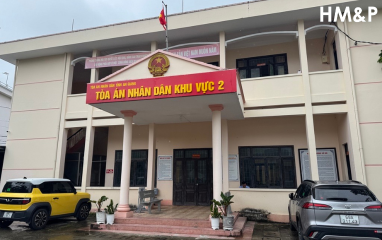
A provision to maintain order in the trial may be necessary. But when the chosen measure no longer stopped at controlling audio and video recording, but changed to prohibiting the bringing of phones, computers and electronic devices into the courtroom, the story was no longer just a court rule. It raises a larger question: how far does the body that issues documents under the law go when "manage" at the same time narrows the rights guaranteed by the Constitution and the law?
An expiration of the lease does not mean that the premises will automatically return to the lessor. In fact, many businesses fall into the situation that the lessee still continues to do business, leaving goods and equipment, not paying the amounts incurred but also refusing to hand over. The longer it lasts, the more the lessor loses the opportunity to exploit the property, incurs management costs and faces pressure to "get back" the premises themselves.
In warehouse lease contract disputes, the lessor often thinks that it has an advantage when the property is damaged, the handover is unsatisfactory and the actual repair costs are incurred. However, from a cracked warehouse floor to a judgment forcing the lessee to compensate is a significant legal gap.
In trade disputes, what gives rise to disagreements is not always one party failing to deliver on its commitments. In many cases, the parties invoke the contract itself to protect themselves, but read the same clause in completely different interpretations. The difference in interpretation not only determines when the contract ends, but also entails many other unpredictable consequences.
A patent is often seen as a recognition of research achievements and a basis for the exclusive owner to exploit the technology in the market. However, in business practice, the value of a patent is determined not only by the granting of the title, but also by the ability of the owner to effectively enforce his or her rights when infringement occurs.
When doing business, most businesses spend a lot of time looking for customers, negotiating prices and expanding markets. However, not all businesses pay commensurate attention to contract development and management. In fact, many commercial disputes worth tens or even hundreds of billions of VND do not stem from deception or deliberate violations of one party, but stem from inadequate terms, agreements that have not been fully recorded or subjectivity in the process of performing contracts.
In the context of deepening international economic integration, Vietnam has signed and participated in many investment promotion and protection agreements, new-generation free trade agreements and high commitments on foreign investor protection. By the end of 2025, Vietnam has been responding to more than 30 lawsuits initiated by foreign investors. Accordingly, on April 23, 2026, the National Assembly passed Resolution No. 20/2026/QH16 on coordination mechanisms and specific policies to improve the effectiveness of international investment dispute prevention and settlement ("Resolution 20/2026"). However, despite the Resolution’s new and progressive provisions, several bottlenecks remain unresolved.
-

-