Insights
In M&A, completing the transaction does not mean that the risk has been closed. It is only after the time of the transfer of shares that the issues that were previously outside the due diligence dossier: from tax obligations, undisclosed debts, false information to violations of the seller's commitments can begin to emerge.
The Law on Investment No. 143/2025/QH15 was approved by the National Assembly on December 11, 2025, effective from March 1, 2026. After the first amendment by Law No. 24/2026/QH16 dated August 24, 2026, the Ministry of Finance continues to develop a draft Law amending and supplementing a number of articles of the Law on Investment 2025 (Draft), which is expected to be submitted to the National Assembly at the 2nd Session in October 2026 and take effect from January 1, 2027.
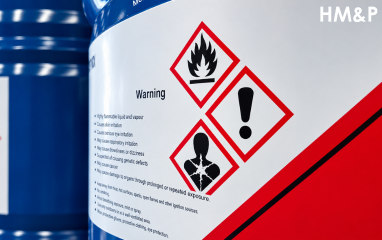
This handbook is compiled by HM&P to systematize the legal regulations on chemicals in Vietnam that are in force, assist enterprises in identifying legal obligations, administrative procedures and the risk of being sanctioned for administrative violations in chemical activities. The document is aimed at enterprises producing, trading, exporting, importing, storing, transporting and using chemicals and enterprises producing and importing products and goods containing hazardous chemicals.
Just a few months after three important Decrees guiding the Law on Chemicals 2025 were issued, the Ministry of Industry and Trade proposed to amend all three documents simultaneously. The very short implementation period easily creates a sense of unstable policy. However, the Draft documents show that the main goal is not to change the management orientation established by the Law on Chemicals and these documents, but to handle unclear, overlapping and inappropriate points that arise when the new regulatory system begins to come into operation.
From January 1, 2026, the Law on Chemicals No. 69/2025/QH15 replaces the Law on Chemicals 2007 and establishes a new management mechanism for chemicals requiring special control. This list is divided into group 1 and group 2, with different management requirements.
This seemingly small difference is becoming a noteworthy problem for businesses operating in the chemical sector, especially in localities with many industrial parks and export processing zones such as Ho Chi Minh City, Dong Nai or Long An. The reason lies in the fact that the same transaction can be simultaneously governed by the law on chemicals, trade, foreign trade management and customs. If you only look at the concept of "export and import" without determining the correct point of departure, destination and legal regime of goods, it is very easy for businesses to carry out excess procedures or, more dangerously, miss mandatory procedures.
In chemical management, the biggest risk to a business sometimes does not start with a chemical incident, but from the gap between what the business is operating and what the legal records represent. A restockpile, a line that has been adjusted, chemical inventory has increased, a chemical safety sheet has not been updated or the declaration data no longer matches reality are all risks to the business of the business.
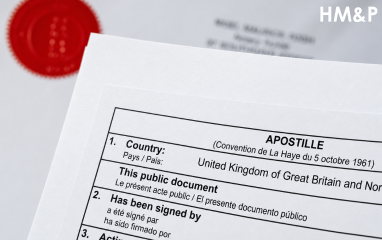
A business registration certificate issued in Vietnam that wants to be used abroad for a long time often has to go through many layers of certification. On the other hand, documents issued by foreign agencies that want to be accepted in Vietnam may also have to be certified in turn in the country of origin, diplomatic missions and competent agencies of the receiving country. Each layer of confirmation entails time, cost and risk of dossiers being returned just because of differences in seals, signatures or authority.
A factory has a certificate, the buyer has accepted the price and the current condition, but the transaction can still be stalled. Because in industrial parks, factories are not independent assets but are closely associated with land lease rights, investment projects, infrastructure contracts and operating conditions. If these factors are not transferred synchronously, businesses may fall into a situation where they have received money but cannot hand over, or have received factories but cannot produce yet.
A land plot worth trillions of VND, an operating factory or a dominant stake in an enterprise can all be very valuable assets. But when Vietnamese enterprises borrow capital from foreign banks, the economic value of the asset does not necessarily mean the ability to use the same asset to secure the loan.
In corporate mergers and acquisitions (M&A) deals, investors often spend a lot of time answering the question of how much the business is worth. However, practice shows that an even more important question is often overlooked: what transaction are the parties actually entering into? When the commercial objective is not properly transformed into a legal structure, the risk is not only that a contract may be invalidated, but can also change the entire way the law applies to the deal. A recent cassation decision by the Supreme Court Judges Council is a clear demonstration of this issue.
For years, a bank's value has often been seen in terms of its capital size, asset quality, branch network or credit market share. But in the digital era, another asset is increasingly determining the attractiveness of M&A deals: customer data.
-

-