Corporate
Vietnam's pharmaceutical retail market is witnessing a period of strong growth and transformation. Needing to scale up quickly, market-leading pharmacy chains such as Pharmacity, FPT Long Chau, and An Khang are all pursuing a strategy to expand their retail store system nationwide. The common goal of these businesses is to occupy a larger market share and penetrate both large cities and rural areas.
The 2005 Commercial Law was expected to be a "framework law" regulating commercial relations in the market economy, but the practice of more than two decades has shown that the role of the "central law" of this law has been significantly reduced. The reason does not lie in a specific provision, but the sum of many different factors such as the wide scope of regulation, the overlap between regulations, and the emergence of new specialized legal frameworks, has faded into obscuring a law that should have played the most important role in the nation's commerce.
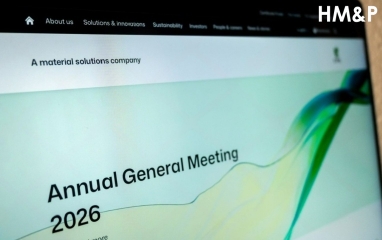
The 2026 General Meeting of Shareholders (AGM) season takes place in a more special context when many important legal changes related to public company governance, information disclosure and operating mechanism of the General Meeting of Shareholders simultaneously take effect, forcing businesses to make appropriate adjustments.
The Law on Corporate Income Tax 2025 ("Law on CIT") allows enterprises to deduct up to 20% of their annual taxable income to form the Science and Technology Development Fund. But the correct compliance when setting up this fund is also something that businesses need to pay attention to. In essence, allowing enterprises to set up science and technology funds is a strategic financial and tax tool, helping enterprises reallocate pre-tax profits to high value-added activities. However, this mechanism is not absolute tax exemption. In case of using the science and technology fund for the wrong purpose, failing to reach the minimum utilization rate as prescribed, or violating the declaration obligation, the enterprise may be subject to the arrears of CIT corresponding to the invalid appropriation, accompanied by late payment interest.
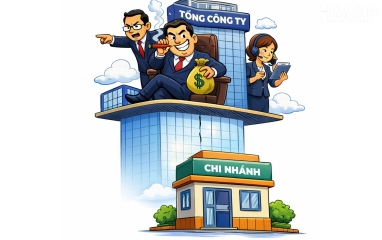
Branches in the corporate governance structure are a common model for expanding operations by area, for operation and decentralization of contract signing. But in order to operate the branch in accordance with the law in practice, should the enterprise authorize the branch or the head of the branch?
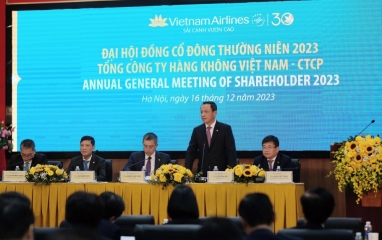
The Annual General Meeting of Shareholders (AGM) is held every year in accordance with the law to ensure the right to participate in governance and supervision of shareholders, especially minority shareholders. In addition to the annual meetings, the General Meeting of Shareholders may hold extraordinary meetings when needs arise during the operation of the enterprise. These meetings play a central role in the adoption of important decisions, directly impacting the company's development direction, organizational structure, and business activities. However, not all resolutions passed at the General Meeting of Shareholders are automatically legally effective. Some serious errors can lead to the risk of the resolution being requested to be canceled.
The Law on Recovery and Bankruptcy 2025 was passed at the 10th National Assembly session and will take effect from March 1, 2026 , not only completing the legal framework in handling businesses in impasse and crisis, but will also feature new principles: prioritizing production recovery, business glasses of enterprises in order to create conditions for enterprises to "return" to the market when they are still able. This is the first time in legislative history that Vietnam has established the procedure for restoring business activities as an independent institution, which is relatively fully regulated, comprehensively and has a legal position equivalent to and in addition to bankruptcy procedures.
Administrative procedure reform is considered the 'backbone' of the modern investment environment. However, practice shows that in Vietnam, many businesses still face cumbersome and inconsistent procedures - even going against the spirit of reform. The gap between policy and practice is therefore still quite far.
The year 2025 will witness strong legal fluctuations unprecedented in Vietnam's legislative history. The National Assembly, together with the Government of ministries, departments and branches, has issued a record number of new laws, decrees and circulars that have created a "fierce flow" of Vietnamese law. Although it opens up opportunities to improve the business and investment environment, this event poses many challenges for the business community. From the perspective of a companion, sticking with businesses through these fluctuations, we would like to offer some thoughts on the multi-dimensional impact of legal flows in 2025, and at the same time suggest some solutions to help businesses proactively "steadily row" in the face of big waters. not to be swept away or drowned in the context of many uncertainties today.
In the days adjacent to the Lunar New Year, which should be a time of exciting trade, many business households and small businesses are worried about the rapid changes in legal policies.
For many years, the first-to-file principle has been considered the pillar of the trademark protection system in Vietnam. This principle brings transparency, simplicity and high predictability to business entities: whoever applies first, if the protection conditions are fully met, will be entitled to the establishment of rights. However, the practice of resolving trademark disputes increasingly shows that this principle no longer operates in isolation. In parallel with registered trademarks, trade names – an object of rights that do not need to be registered – are playing an increasingly important role, even potentially undermining the ability of the dossiers under examination to be granted trademarks.
On June 10, 2025, in Notice 3591 of the Department of Industry and Trade of Ho Chi Minh City on the termination of the operation of representative offices of foreign traders in Ho Chi Minh City, it is shown that as of June 10, there are 243 representative offices that have ceased to operate in fact but have not yet carried out administrative procedures to terminate the operation of representative offices . In case of delay or failure to carry out administrative procedures as requested, what are the legal liabilities of the representative office or foreign trader or unit directly operating the representative office in Vietnam? In this article, HM&P will point out the risks that representative offices, even foreign traders, face if they do not complete this procedure.
-

-