Corporate
For many years, reforming investment and business conditions has always been considered one of the important focuses of the process of reforming economic institutions in Vietnam. From major reviews in the spirit of Government Resolutions to recent administrative procedure reduction programs, the goal throughout is to reduce compliance costs, create a more favorable business investment environment for businesses, and promote economic growth.
The Law on Support for small and medium enterprises No. 04/2017/QH14 after 8 years of implementation has contributed to the formation of the first legal framework for activities to support business groups accounting for more than 98% of Vietnamese enterprises . However, in the face of rapid changes, capacity building for small and medium-sized enterprises ("SMEs") has become an urgent requirement. Therefore, the Ministry of Finance is consulting on the Draft Law on Amendments to the Law on SME Support ("Draft"), in order to improve the mechanism to support SMEs in a more substantive and effective way.
According to the report of the Market Surveillance Force, in 2025, the country will handle more than 23,000 cases of violations related to counterfeit goods and goods of unknown origin, with a total value of nearly 290 billion VND. In just the first three months of 2026, the number of violations continues to reach 9,574 cases . These figures show that the problem of counterfeit goods and goods of unknown origin is still a big challenge for management agencies, businesses and consumers.
The Ministry of Public Security is submitting a draft amendment to the Prime Minister's Decision 09/2023/QD-TTg regulating the order, procedures, competence, issuance and management of APEC business travel cards (Decision 09) to seek opinions on adjusting regulations related to this regulation to suit the new development context of Vietnam.
In the context of the strong development of the digital economy and increasingly complex mergers and acquisitions (M&A) deals, the legal framework on competition in Vietnam is clearly shifting in the direction of "tightening discipline". The two main groups of tools used are standardizing the procedures for controlling economic concentration according to the notification threshold and increasing the feasibility of the administrative sanctioning mechanism, especially for violations of procedures and obligations to provide information.
Vietnam's pharmaceutical retail market is witnessing a period of strong growth and transformation. Needing to scale up quickly, market-leading pharmacy chains such as Pharmacity, FPT Long Chau, and An Khang are all pursuing a strategy to expand their retail store system nationwide. The common goal of these businesses is to occupy a larger market share and penetrate both large cities and rural areas.
The 2005 Commercial Law was expected to be a "framework law" regulating commercial relations in the market economy, but the practice of more than two decades has shown that the role of the "central law" of this law has been significantly reduced. The reason does not lie in a specific provision, but the sum of many different factors such as the wide scope of regulation, the overlap between regulations, and the emergence of new specialized legal frameworks, has faded into obscuring a law that should have played the most important role in the nation's commerce.
The 2026 General Meeting of Shareholders (AGM) season takes place in a more special context when many important legal changes related to public company governance, information disclosure and operating mechanism of the General Meeting of Shareholders simultaneously take effect, forcing businesses to make appropriate adjustments.
The Law on Corporate Income Tax 2025 ("Law on CIT") allows enterprises to deduct up to 20% of their annual taxable income to form the Science and Technology Development Fund. But the correct compliance when setting up this fund is also something that businesses need to pay attention to. In essence, allowing enterprises to set up science and technology funds is a strategic financial and tax tool, helping enterprises reallocate pre-tax profits to high value-added activities. However, this mechanism is not absolute tax exemption. In case of using the science and technology fund for the wrong purpose, failing to reach the minimum utilization rate as prescribed, or violating the declaration obligation, the enterprise may be subject to the arrears of CIT corresponding to the invalid appropriation, accompanied by late payment interest.
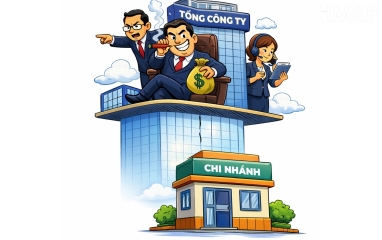
Branches in the corporate governance structure are a common model for expanding operations by area, for operation and decentralization of contract signing. But in order to operate the branch in accordance with the law in practice, should the enterprise authorize the branch or the head of the branch?
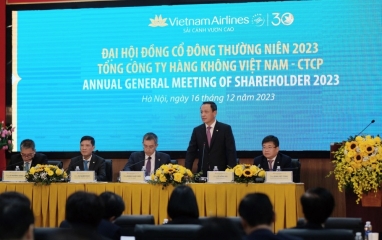
The Annual General Meeting of Shareholders (AGM) is held every year in accordance with the law to ensure the right to participate in governance and supervision of shareholders, especially minority shareholders. In addition to the annual meetings, the General Meeting of Shareholders may hold extraordinary meetings when needs arise during the operation of the enterprise. These meetings play a central role in the adoption of important decisions, directly impacting the company's development direction, organizational structure, and business activities. However, not all resolutions passed at the General Meeting of Shareholders are automatically legally effective. Some serious errors can lead to the risk of the resolution being requested to be canceled.
The Law on Recovery and Bankruptcy 2025 was passed at the 10th National Assembly session and will take effect from March 1, 2026 , not only completing the legal framework in handling businesses in impasse and crisis, but will also feature new principles: prioritizing production recovery, business glasses of enterprises in order to create conditions for enterprises to "return" to the market when they are still able. This is the first time in legislative history that Vietnam has established the procedure for restoring business activities as an independent institution, which is relatively fully regulated, comprehensively and has a legal position equivalent to and in addition to bankruptcy procedures.
-

-