


If designed in the right direction, the Law on Derivatives Trading not only serves the goal of hedging risks for domestic enterprises but also gradually helps to form an influential commodity trading center in the region. The Ministry of Industry and Trade earlier this year proposed to develop a separate Law on Trading in Derivatives[1] instead of just adding some provisions in the 2005 Commercial Law for a reason.
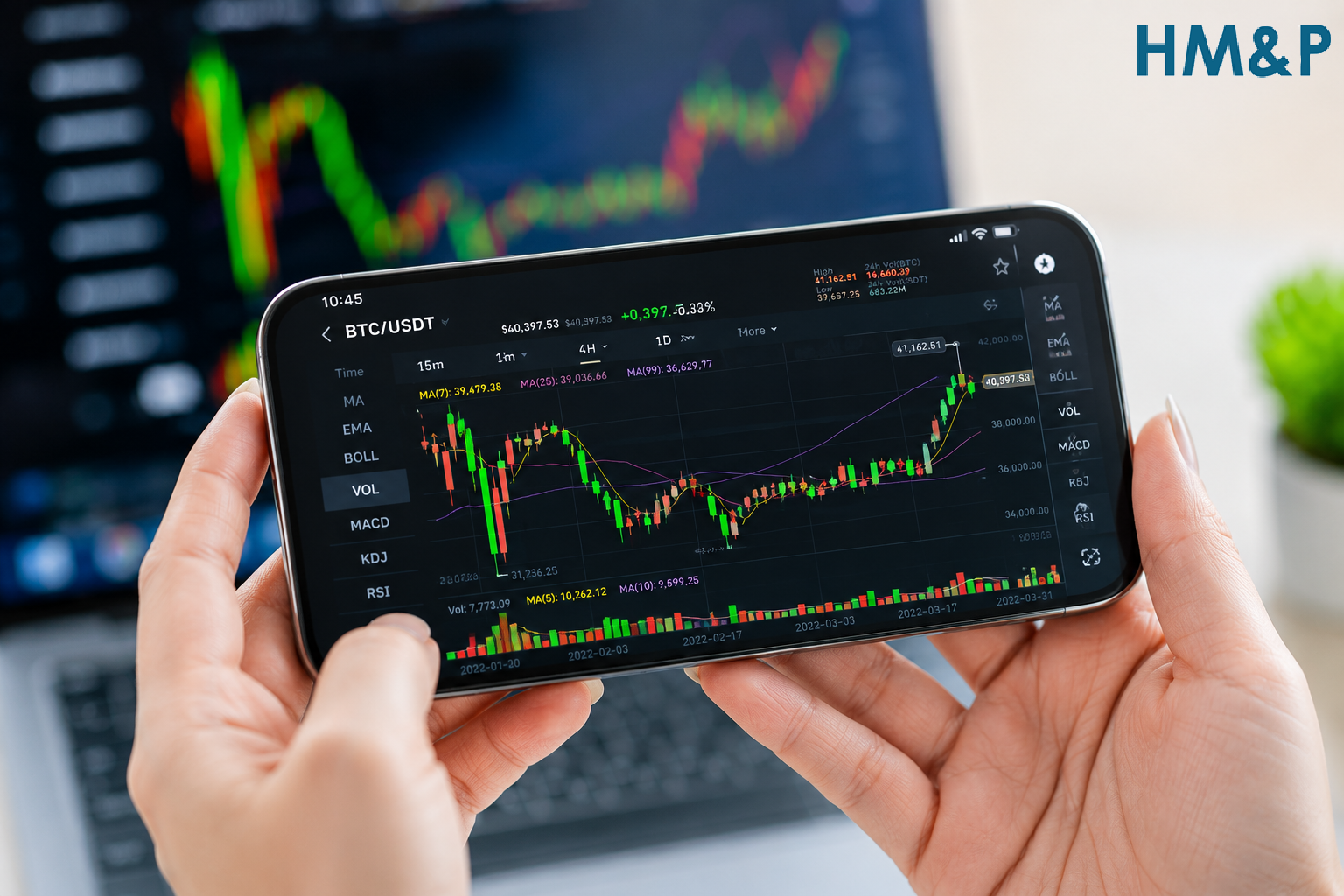
Participants trade based on price predictions in search of profits or hedge against price fluctuations
The derivatives market is a place to buy and sell financial contracts whose value depends on the price fluctuations of the underlying commodities (such as agricultural products, metals, energy). Participants trade based on price predictions in search of profits or hedge against price fluctuations. Regulations on derivatives trading in Vietnam were already mentioned in the 2005 Commercial Law and guiding documents, but the market context at that time was still very primitive and mainly aimed at buying and selling goods through the Vietnam Commodity Exchange.
Up to now, Vietnam's legal system has not fully regulated many core components of the modern derivatives market. Over-the-counter (OTC) trading almost does not have its own legal framework. The legal status of the clearing house has not been fully established. Regulations on position limits, market risk management, information transparency and international connectivity still have many gaps. Many people think that the derivatives market in Vietnam is mainly financial speculation, but this only reflects a very small part of the reality.
In developed economies, the majority of derivatives trading is used as a risk management tool. For steelmakers, fluctuations in iron ore prices can significantly alter input costs. For coffee exporters, a sharp drop in commodity prices at harvest time can lose most of their profits. For airlines or logistics businesses, fuel prices are always a variable that is difficult to predict.
In such cases, futures, options or swaps allow businesses to fix future prices, thereby being more proactive in building production and business plans. The core economic function of the derivatives market is therefore not to create risks, but to help disperse and manage risks more effectively.
Vietnam is one of the major manufacturing countries in the world but has not been able to contribute a voice in the journey of forming global market prices. Currently, when faced with commodity price fluctuations on a global scale like now, domestic businesses can only access these price risk management tools through foreign organizations or exchanges. This paradox leads to a situation where Vietnamese businesses have to spend more transaction costs, access is also more limited, and Vietnam also misses the opportunity to form a market that can directly support the domestic economy. Therefore, the Law on Derivatives Trading is really an opportunity for businesses and the whole sugar economy to participate in the role of "determining the price of the international market". The problem is which derivatives market development model will we choose?
Lessons from three development models in the world
International experience shows that there is no single model that works for every country.
In the US, the derivatives market is managed in a very centralized and closely monitored way. Large exchanges such as CME Group or ICE operate under the supervision of a specialized agency with a multi-tiered risk management system. Most transactions are secured through a central clearing house. Margin requirements, position limits, and information transparency are applied at a very high level. The risk management mechanism and real-time transaction monitoring capacity of the United States are what Vietnam refers to and learns.
Singapore chose a different approach. Instead of relying on the size of its domestic market, the country focuses on building a trading hub and regional connectivity. The regulatory framework is designed in an open manner, facilitating the participation of international organizations while maintaining strict risk management standards. The biggest lesson from Singapore is the ability to connect international liquidity through a transparent and stable institutional system.
Meanwhile, China develops the market according to a more cautious roadmap. The country prioritizes building exchanges associated with strategic commodities such as iron ore, energy, soybeans and industrial metals. Only when the liquidity is large enough and the monitoring system is strong enough, the scope of operation can be expanded step by step. It is worth noting that the derivatives market in China has always been closely associated with the country's strategy for the development of key economic sectors.
A unique path for Vietnam
If you look at the current conditions, it is difficult for Vietnam to apply the US model intact. When the market size is small, the number of participating enterprises is still limited and the management capacity is not enough to operate a system with a level of complexity similar to the world's leading financial centers.
However, choosing to completely follow Singapore's open model also has many potential risks when the domestic market does not have enough depth and the monitoring mechanism is still in the process of being finalized. Therefore, Vietnam's most reasonable option at this time is probably a hybrid model, combining China's caution and Singapore's level of integration.
In the early stages, the focus should be on developing products that are associated with the advantages or actual needs of the Vietnamese economy such as coffee, rice, rubber, pepper, steel and energy. These are all commodities that play an important role in exports or are greatly affected by international price fluctuations.

Source: The Saigon Times
In the next phase, it is necessary to focus on perfecting the central clearing mechanism, standardizing the escrow system, and building real-time market surveillance capacity. Only when these foundations are strengthened, the expansion of international connectivity and the development of the OTC market can be carried out safely and sustainably.
Central clearing – the "heart" of the market
In the entire dossier of developing the Law, one of the most notable contents is the proposal to establish a clearing house. This can be considered the "heart" of the modern derivatives market.
Without this mechanism, each party to the transaction must directly face counterparty risk. In the event that one party becomes insolvent, the chain effect can spread to the entire system. In contrast, when a clearing house stands between buyers and sellers, risk is centrally managed, margin mechanisms are standardized, and the likelihood of system failure is significantly reduced.
The global financial crisis of 2008 has shown the serious consequences of the derivatives market when there is a lack of appropriate control mechanisms. Therefore, if a priority must be chosen in the process of developing the Law, the establishment of a central clearing mechanism probably needs to be placed at the forefront.
Epilogue
If designed in the right direction, the Law on Derivatives Trading not only serves the goal of hedging risks for domestic enterprises. Further, this can be the foundation for Vietnam to gradually form an influential commodity trading center in the region for commodities in which Vietnam has competitive advantages such as coffee, rice or rubber.
International experience shows that the most successful markets are not the ones with the largest trading volumes, but the ones that help businesses manage risk most effectively. It should also be the most important measure when developing the Law on Derivatives Transactions in Vietnam. If designed in the right direction, this new regulation will not only fill the legal gap that has existed for many years but also contribute to upgrading market infrastructure, improving the resilience of the economy to external shocks and gradually bringing Vietnam deeper into the process of shaping commodity prices in the region and the world gender.
Lawyer Nguyen Van Phuc
HM&P Law Firm
Read more: Việt Nam nên chọn mô hình phát triển thị trường hàng hóa phái sinh nào?
[1] https://baochinhphu.vn/de-xuat-xay-dung-luat-giao-dich-hang-hoa-phai-sinh-102260225144614255.htm, accessed on 31/05/2026.


