


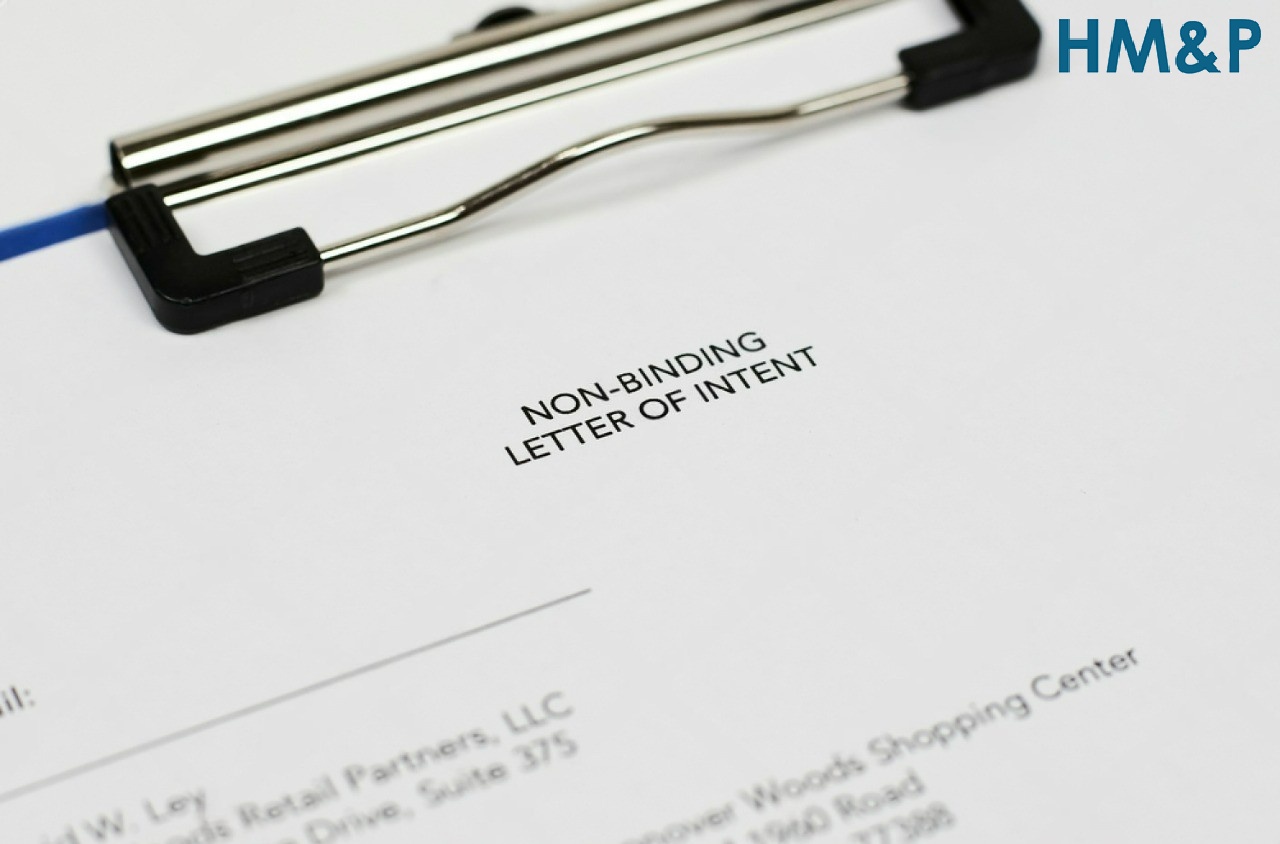
In many mergers and acquisitions (M&A) transactions, the parties often devote most of their attention to the formal transfer agreement, while the Letter of Intent (LOI) is just a goodwill starter. However, international practice shows that many major disputes start from this seemingly "non-binding" document itself.
In fact, it is the intertwining of "intent" and "commitment" that makes LOIs one of the most disputeable documents in M&A activities.
In Vietnam, along with the development of the M&A market and the increasing participation of foreign investors, LOIs are increasingly popular in investment transactions, capital transfers and business acquisitions. However, many businesses still tend to underestimate the legal significance of LOIs, leading to risks in the process of negotiating and implementing transactions.
An LOI is not just a "memorandum of understanding"
In practice, LOI is often used to record the basic contents of the proposed transaction such as the purchase price, transaction structure, due diligence, negotiation deadline or prerequisites before signing a formal contract.
Theoretically, LOIs are generally divided into two content groups.
The first group is "non-binding" clauses, which only show the direction and willingness of the parties to negotiate, such as the expected price, ownership ratio, or transaction structure. These provisions usually do not give rise to a mandatory obligation to buy or sell the business.
The second group is "binding" clauses, that is, they are legally binding from the moment of signing. These are usually related to information security, exclusivity/no-shop, allocation of transaction costs, applicable laws, or dispute resolution mechanisms.
In fact, it is the intertwining of "intent" and "commitment" that makes LOIs one of the most disputeable documents in M&A activities.
Many businesses think that simply stating "non-binding" in the LOI is enough to eliminate any legal obligations. However, international experience shows that courts and arbitrators often look not only at the title of the text, but also at the specific content, wording, as well as the actual behavior of the parties during the negotiation process.
When "non-binding" is not necessarily non-binding
One of the typical cases that is often cited by international M&A lawyers is the dispute between Global Asset Capital and Rubicon in the state of Delaware (USA).[1]
In this case, the two parties signed an LOI related to a corporate restructuring transaction. The LOI has provisions on information confidentiality, negotiation exclusivity and the obligation to negotiate in good faith. After signing, the seller almost stopped responding and at the same time contacted other investors.
A Delaware court later issued an emergency order, prohibiting the seller from disclosing transaction information and continuing negotiations with third parties. It is worth noting that the court held that "silence" and failure to continue the exchange could be considered a violation of the obligation to negotiate in good faith that the parties had committed in the LOI.
Another case in the U.S. shows an even greater risk: even if the LOI states "non-binding," the actual behavior of the parties could still lead the court to conclude that a legal commitment has been formed.
In the dispute between David McDavid and Turner Broadcasting, although the LOI stipulates that the transaction is only valid after the formal contract is signed, the seller's representative then repeatedly uses statements such as "we have a deal" or "the deal is done". at the same time, continue to exchange drafts and prepare to announce transactions to the outside[2].
When the deal was ultimately sold to a third party, the court upheld the award of approximately US$281 million in compensation to the buyer, arguing that the post-LOI actions and statements demonstrated the binding will of the parties.
These cases show that the legal risk of the LOI lies not only in the content of the document but also in the way the parties behave during the negotiation process.
How does Vietnamese law recognize LOI?
Currently, Vietnamese law does not have a separate regulation regulating LOI in M&A activities. However, that does not mean that this document is outside the scope of the law.
According to the Civil Code 2015, an agreement can take legal effect if it meets the conditions of the subject, voluntary will, the content does not violate the prohibition and there is agreement on rights and obligations between the parties.
Therefore, in the event of a dispute, the court or arbitrator will not only look at the name "LOI", "MOU" or "Term Sheet", but will evaluate as a whole: from the content of the agreement; language used; acts of the parties before and after signing; as well as the true purpose of the transaction.
In fact, many of the provisions in the LOI are fully capable of being considered independently binding, especially those on information security, exclusive negotiations, compensation for costs, obligations of good faith in negotiations, or applicable laws and dispute resolution.
Although Vietnam belongs to the civil law system and often attaches more importance to documents than the common law system of the United States, the dispute settlement agency can still consider the actual will of the parties through the act of implementing transactions, exchanging emails, etc minutes of meetings or public statements.
This is especially noteworthy in the context that many M&A transactions in Vietnam are currently quite "soft" implemented, with parties starting to appraisal, share internal data or even announce deals when the contract is not officially completed.

Notably, in many deals, the legal risk does not necessarily lie in the fact that the buyer can force the seller to complete the transaction.
The biggest risk is not in the LOI, but in how the LOI is used
In trading advisory practice, one of the most common mistakes made by businesses is to use the LOI as a "standard template" without fully assessing the legal consequences of each provision.
Many LOIs are very sketchy but contain strongly committed phrases such as "agreed transaction", "committed purchase" or "the parties shall complete the acquisition". In the event of a dispute, it is these expressions that can cause the document to be interpreted beyond the original will of the parties.
In addition, many businesses also neglect to control behavior after signing an LOI. Publicly stating that the deal has been closed, stopping working with another investor, or implementing an operational integration before signing a formal contract can all provide additional grounds for the other party to argue that the deal has been committed.
Notably, in many deals, the legal risk does not necessarily lie in the fact that the buyer can force the seller to complete the transaction. In fact, the forced continuation of an M&A transaction in Vietnam also depends on many other legal conditions such as internal approval, investment conditions, transfer conditions or approval by state agencies.
However, even if the transaction is not forced to be completed, the business may still face claims for damages, reimbursement of due diligence costs, or disputes related to exclusivity clauses and information security.
What do businesses need to do?
In the context of increasingly professional M&A activities and integration with international practices, Vietnamese businesses need to see the LOI as a real legal document instead of just an "opening procedure".
First of all, it is necessary to clearly distinguish which terms are "binding" and which are "non-binding". If the parties do not want to be bound by the purchase and sale obligations, the LOI should clearly state that the transaction is only considered complete when the contract is officially signed.
Businesses should also refrain from using language that expresses absolute commitment in the LOI and in the subsequent communication process. Many international disputes show that emails, internal statements or press releases are sometimes more dangerous than the content of the LOI itself.
In addition, for transactions of high value or involving sensitive data, businesses should separate confidentiality agreements (NDAs) instead of just specifying sketchy in LOIs.
In case there is an exclusive clause, it is necessary to specify the time, scope, sanctions for violations and the cost compensation mechanism to avoid difficulties in enforcement.
For transactions with foreign elements, businesses should also consider choosing commercial arbitration instead of court to ensure confidentiality and efficiency in dispute resolution.
In the modern M&A environment, LOIs are no longer "formal" documents as many businesses think. Although not yet a formal transfer agreement, an LOI can still create significant legal obligations if drafted or implemented carelessly. International experience shows that major disputes in M&A sometimes do not start with the main contract, but from the preliminary commitments in the early stages of negotiations. With the Vietnamese market, where M&A activities are increasingly vibrant and more international, the correct understanding and use of LOI will become an important factor to control transaction risks and protect the interests of businesses.
Lawyer Nguyen Van Phuc
HM&P Law Firm
[1] https://www.milbank.com/a/web/595/010510Global-Asset-Capital-LLC-v-Rubicon-US-Reit.pdf, accessed on 2026/05/25.
[2] https://law.justia.com/cases/georgia/court-of-appeals/2010/a09a2314.html, accessed on 2026/05/25.


