


In the context that chemical business activities play an increasingly important role in many industries in Vietnam and are governed by a complex system of specialized legal regulations that are regularly updated, grasping and complying with legal requirements is a key issue for businesses. Stemming from practical needs and common problems in the process of advising clients, HM&P Law Firm ("HM&P") has compiled and developed the publication "Q&A: Law on Chemical trading in Vietnam" to clarify the current legal regulations on chemical trading. on the basis of the Law on Chemicals 2025 and the Draft Decrees guiding the implementation are expected to be issued, thereby supporting businesses to systematically approach regulations and limit legal risks in the process of operation.
This is a follow-up to the post published on 30 December 2025, available at: https://hmplaw.vn/vi/hoi-dap-ve-phap-luat-trong-linh-vuc-kinh-doanh-hoa-chat-tai-viet-nam
 9. Is the transportation of hazardous chemicals by tank trucks allowed and what legal regulations need to be complied with?
HM&P:
The transportation of hazardous chemicals by tank trucks is completely allowed but must meet the requirements for the safety of transporting dangerous goods in Decree No. 34/2024/ND-CP dated March 31, 2024 and Decree No. 161/2024 on amending, supplementing and annulling a number of articles of Decree No. 34/2024. Accordingly, enterprises must fully meet the requirements for the safety of transporting dangerous goods, specifically such as: means of transport must meet all conditions for traffic participation as prescribed by law; licenses for transportation of dangerous goods of each type or group of goods corresponding to transportation; Persons involved in transporting dangerous goods must be trained and issued certificates of completion of the training program on safety of dangerous goods that they escort, load, unload or store,...
Within the scope of the Law on Chemicals 2025, pursuant to Clause 2, Article 13 of the Law on Chemicals 2025, in case of transporting hazardous chemicals, enterprises need to ensure compliance with safety and security in chemical activities in Article 33, for example, it is necessary to have a person in charge of professional responsibility, ensuring protective equipment,.. and take measures to prevent and respond to incidents at Point c, Clause 1, Article 38 of the Law on Chemicals 2025.
10. In case the enterprise transports chemicals by ship/barge, is it mandatory for seafarers to be trained and have professional certificates in the transportation of dangerous goods; At the same time, does the means of transport have to meet the requirements for dangerous goods warning signs, signs, and labels?
HM&P:
Pursuant to Clause 1, Article 13 and Article 14 of Decree 34/2024/ND-CP stipulating the List of dangerous goods, transportation of dangerous goods by inland waterways, accordingly:
- For seafarers, seafarers are required to be trained and have special professional certificates in dangerous goods transportation as prescribed by the Minister of Transport (now the Ministry of Construction); be trained and granted certificates of completion of dangerous goods safety training programs.
- For means of transport, ships/barges used to transport dangerous goods must meet the conditions for participating in traffic as prescribed and must be affixed with the logo of dangerous goods. If there are many different types of dangerous goods on a vehicle, the vehicle must affix enough logos of those goods. Place the logo on either side of the vehicle.
After unloading all dangerous goods and not continuing to transport such goods, the vehicle must be cleaned and peeled off or removed all dangerous symbols, the responsibility for implementation belongs to the transport unit or the vehicle driver (crew).
11. Are enterprises that store hazardous chemicals in small quantities temporarily (for a short time) apply simpler conditions than ordinary chemical warehouses?
HM&P:
The storage of hazardous chemicals in small quantities or for a short period of time does not give rise to an exemption mechanism; accordingly, enterprises must still fully meet the safety requirements and conditions applicable to hazardous chemical warehouses specified in Section II of the National Technical Regulation QCVN 05A:2020/BCT amended by Section II of the National Technical Regulation QCVN05A:2020/BCT/SDD:2024 on safety in production, trading, using, preserving and transporting hazardous chemicals.
12. If you want to expand the scale of the chemical warehouse, do you need to notify or apply for re-approval with the State management agency?
HM&P:
Enterprises in case of wishing to expand the scale of chemical warehouses must comply with the provisions of Clause 3, Article 38 of the Draft Decree on chemical safety. Accordingly, when there is a change or expansion in the case specified in Clause 2, Article 35 of this Draft, the investor, organization and individual engaged in chemical activities must adjust the plan for prevention and response to chemical incidents. This is the case: (i) there is at least 01 chemical in Schedule A or 01 mixture of Schedule B in Appendix IV of the Draft Decree on the List with a stock volume greater than or equal to the volume threshold specified in Appendix IV; (ii) The total proportion of the volume of hazardous chemicals stored above the prescribed threshold is greater than or equal to 1 in case it is not subject to case (i).
In addition, in case the enterprise changes its scale but does not fall into the case specified in Clause 2, Article 35 of the Draft Decree on Chemical Safety, it is necessary to formulate and promulgate measures for the changed items.
13. If inspected and examined unexpectedly, what core legal documents and documents should enterprises in storage/transportation activities prepare to avoid the risk of being sanctioned?
HM&P:
Pursuant to Articles 13 and 14 of the Law on Chemicals 2025; Articles 35 and 37 of the Draft Decree on chemical safety; Article 19 of the Draft Decree on chemical management; Decree 161/2024/ND-CP; Below are some core legal documents that businesses need to prepare to avoid the risk of being sanctioned if enterprises engaged in chemical storage/transportation are unexpectedly inspected and examined:
- Certificate of Business Registration;
- Certificate of eligibility for operation of chemical storage services (for enterprises providing chemical storage services);
- License to transport dangerous goods (for enterprises engaged in transportation activities)
- Chemical incident prevention and response plan approved by a competent authority/Chemical incident prevention and response measures have been issued;
- Decision on approval or written certification of documents related to environmental protection;
- A college degree or higher in chemistry of the person in charge of chemical safety;
- Decision on recognition of results of chemical safety inspection and training of organizations and individuals;
- Written approval of the results of the acceptance test on fire prevention and fighting; A table of internal regulations on chemical safety, with a danger sign suitable to the danger level of the chemical, hung in a conspicuous place (for enterprises providing chemical storage services);
- Documents permitting the use of chemical storage warehouses; Certificate of use rights for the land plot for construction of chemical storage warehouses (for enterprises providing chemical storage services).


14. If the chemical trader rents a warehouse at the warehouse leasing service unit, which party will be obliged to develop measures to prevent and respond to chemical incidents?
HM&P:
The obligation to develop measures to prevent and respond to chemical incidents will belong to the chemical lessor.
Pursuant to Clause 1, Article 5 of the Draft Decree on chemical management, the general conditions for ensuring safety in chemical trading are the need to have a chemical warehouse that meets the provisions of Clauses 2, 3, 4, 5, 6, Article 4 of this Draft or rent a warehouse of an organization, individuals who are granted certificates of eligibility for chemical storage services by competent agencies.
In particular, Clause 5, Article 4 of the Draft Decree on Chemical Management states that, in order to ensure safety, organizations need to have plans or measures to prevent and respond to chemical incidents and means to ensure safety, and plans for protection, fire prevention and fighting approved by competent agencies according to regulations. Thus, if a chemical trading organization builds its own warehouse, it is necessary to develop measures to prevent and respond to chemical incidents.
Conversely, if a chemical trading organization subleases the warehouse of the chemical storage service provider, the leasing organization must meet the conditions specified in Article 19 of the Draft Decree on chemical management, including the requirement to comply with Article 38 of this Draft on formulation of preventive measures. responding to chemical incidents and being granted the Certificate of eligibility for chemical storage services.
In addition, in the composition of the dossier of application for the Certificate of eligibility for chemical storage services, Point i, Clause 1, Article 20 of the Draft Decree on Chemical Management mentions that the components of the dossier of application for the Certificate include "measures to prevent and respond to chemical incidents that have been issued for chemical warehouses".
Therefore, in case a chemical trading organization subleases the warehouse of the chemical warehouse lessor, the lessor will be responsible for taking measures to prevent and respond to chemical incidents.
15. IMDG (IMDG stands for The International Maritime Dangerous Goods, which is the code of international maritime dangerous goods) by trailer and barge, does not store or preserve goods. In this case, is the enterprise subject to chemical safety training?
HM&P:
Enterprises that transport IMDG goods by trailers and barges, without storing or preserving them, are not considered "chemical activities" according to Clause 16, Article 2 of the Law on Chemicals 2025. On that basis, tractor and barge drivers are not subject to specialized chemical safety training according to Article 31 of the Draft Decree on chemical safety.
However, for the transportation of dangerous goods, the operator of this vehicle needs to meet a number of conditions as follows:
Firstly, for persons participating in the transportation of dangerous goods on internal waterways, it is mandatory to be trained and have special professional certificates in the transport of dangerous goods according to the regulations of the Minister of Transport (now the Ministry of Construction); be trained, grant a certificate of completion of the dangerous goods safety training program as prescribed in Clause 1, Article 13 of Decree No. 34/2024/ND-CP.
Secondly, for those participating in the transportation of dangerous goods on roads, it is mandatory to be trained in the transportation of dangerous goods according to Article 8 of Decree 161/2024/ND-CP.
Therefore, units transporting IMDG goods by trailers and barges are not required to provide specialized safety training in chemicals, but must still fully comply with training and training requirements according to regulations on transportation of dangerous goods.
16. What are the subjects required to participate in specialized safety training in chemicals? Can businesses organize their own training? If so, what conditions need to be met?
HM&P:
Pursuant to Clause 3, Article 31 of the Draft Decree on Chemical Safety; Subjects participating in specialized chemical safety training are prescribed as follows:
a) Group 1, including:
Heads of organizations, units and establishments directly engaged in chemical activities; heads of affiliated departments, departments and branches, workshop foremen or equivalent in charge of chemical activities;
The deputy head as prescribed at Point a, Clause 3 of this Article shall be assigned to be in charge of administering chemical activities.
b) Group 2, including:
Persons responsible for chemical safety of organizations and individuals engaged in chemical activities;
Persons who directly supervise chemical safety at the workplace; warehouse keepers involved in chemical activities or equivalent.
c) Group 3, including:
Workers directly involved in chemicals;
On-site medical staff at chemical activities (if any).
In addition, according to Clause 1, Article 31 of the Draft Decree on industrial development and chemical safety and security; organizations and individuals engaged in chemical activities shall organize chemical safety training. Therefore, enterprises can organize chemical safety training for employees themselves. In order to be able to organize training by itself, enterprises need chemical safety trainers to have a university degree or higher in chemistry and at least 03 years of experience in positions related to chemical safety activities at the organizations and individuals they provide training (Clause 1, Article 33 of the Draft Decree on Chemical Safety).
17. What jobs will the subjects participating in chemical safety training in group 2 correspond to? Is it mandatory to train or train on chemical safety for the above group of subjects?
HM&P:
Pursuant to Clauses 1 and 3, Article 31 of the Draft Decree on Chemical Safety, enterprises are responsible for organizing chemical safety training every 02 years for the three groups of subjects in Clause 3 of this Article (as mentioned in Section 16 above). Therefore, group 2 is also trained in chemical safety.
At Point b, Clause 3, Article 31 of the Draft Decree on chemical safety, it is clearly stipulated that group 2 may include: (i) persons responsible for chemical safety of organizations and individuals engaged in chemical activities; (ii) Persons who directly supervise chemical safety at the workplace, warehouse keepers related to chemical activities or equivalent. Therefore, it can be understood that these are subjects with specific job positions supervising or being responsible for chemical activities taking place at the enterprise such as warehouse keepers, inspection and chemical supervision managers or inspectors or responsible for chemical safety at the workplace.
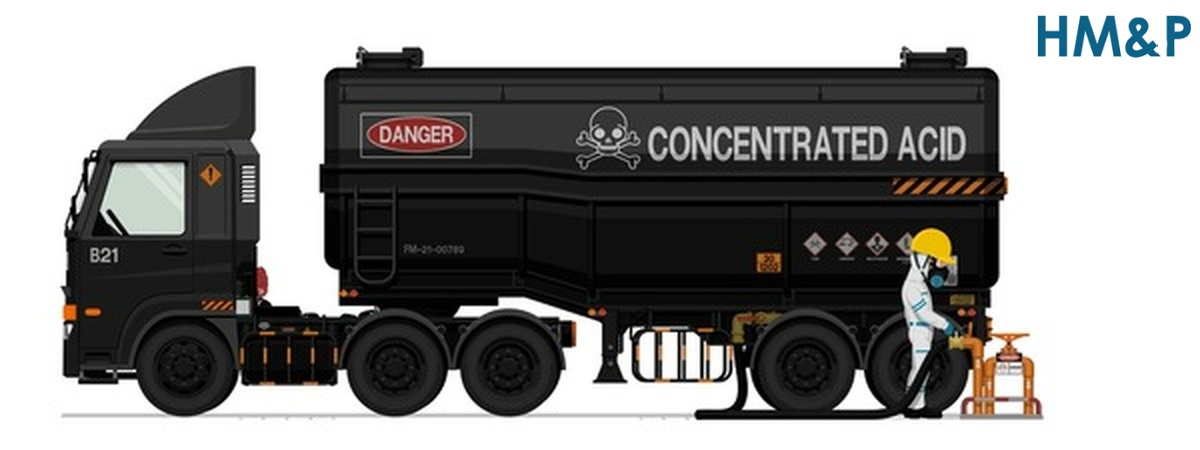
18. If there is an incident of leakage, spillage, or accident during transportation or storage, how is the legal responsibility of the enterprise determined? Is compensation required?
HM&P:
Pursuant to Clause 3, Article 41 of the Law on Chemicals 2025, enterprises must perform the following obligations:
- Promptly apply preventive measures and response plans, and at the same time immediately notify competent State agencies for coordination in handling if the response capacity is exceeded.
- Comply with the request of the competent authority in case of request for mobilization of people and property.
- Develop reports and send them to local branch management agencies, which provide detailed information on incidents, types of chemicals, causes, response measures, volume of chemicals lost, consequences and directions for remediation.
In addition to the above responsibilities, enterprises may be responsible for compensation for damage from consequences arising in accordance with the civil law on compensation for non-contractual damages.
19. Can a chemical trading enterprise with few employees and a small scale concurrently serve as a person in charge of chemical safety? What are the requirements required to take on the role of this individual?
HM&P:
Business enterprises may be allowed to concurrently serve as persons in charge of chemical safety. However, that individual must ensure the professional requirements in Clause 2, Article 29 of the Draft Decree on Chemical Safety. Accordingly, the person in charge of the profession must have an intermediate or higher degree related to chemistry.
In addition, enterprises also need to ensure chemical safety training every 02 years for this individual according to Point b, Clause 3, Article 31 of the Draft Decree on Chemical Safety.
20. If the hospital buys chemicals such as Formol, Methanol, and Phenol for use, does it need someone in charge of chemical safety? Do chemical-related work technicians need chemical safety training training?
HM&P:
For the request to arrange a person in charge of chemical safety at the hospital
The hospital uses chemicals such as Formol, Methanol, Phenol for professional activities. This is a form of "chemical activity" according to Clause 16, Article 2 of the Law on Chemicals 2025. Therefore, pursuant to Clause 2, Article 33 of the Law on Chemicals 2025, hospitals must arrange a person who is professionally responsible for chemical safety as prescribed.
For requirements for chemical safety training and training for technicians
Technicians who directly work with chemicals belong to group 3 – workers directly involved in chemicals. Therefore, they must be trained in chemical safety according to Point c, Clause 3, Article 31 of the Draft Decree on Chemical Safety and Clause 3, Article 33 of the Law on Chemicals 2025.
|
Disclaimer: This publication has not been compiled for any particular customer situation. The content of the publication does not constitute legal advice of any kind. In case you need specific advice, please contact us according to the information as Foreword. |
Please read more and download full content of publication (PDF File) here


