




Specific policies of the Vietnam International Financial Center according to Resolution 222 of the National Assembly
On June 27, 2025, the National Assembly of the Socialist Republic of Vietnam passed Resolution No. 222/2025/QH15 on the establishment of the International Financial Center (Vietnam IFC) in Ho Chi Minh City and Da Nang (Resolution 222). Resolution 222 takes effect from September 1, 2025. This is a strategic move to create a conducive environment for international financial activities, attract foreign investment, and promote innovation. Vietnam IFC is expected to become a competitive financial center in the region, making an important contribution to Vietnam's economic development and international integration in the new period.
The important role of law firms in IPO activities of enterprises in the Vietnamese stock market
An Initial Public Offering (IPO) is an important milestone in the development journey of a business, marking the transition from a private company to a public company. In Vietnam, the capital market is developing rapidly, with exchanges such as the Ho Chi Minh City Stock Exchange. Ho Chi Minh City (HOSE) and the Hanoi Stock Exchange (HNX) play a central role in supporting businesses to raise capital through IPOs. However, the IPO process is not only a financial activity but also a complex legal process, requiring strict compliance with the provisions of Vietnamese law and international standards (if the IPO has foreign elements). In this context, the role of law firms becomes essential to ensure businesses overcome legal challenges, optimize processes, and achieve capital raising goals effectively.
Guidance on procedures for registration of peer-to-peer lending mechanism for Fintech companies
From July 1, 2025, peer-to-peer lending (P2P Lending) activities in Vietnam have been officially included in the legal framework in Decree 94/2025/ND-CP. This is an important step forward to control risks and protect consumers in the context of strong development of Fintech models. However, to participate in this mechanism, Fintech companies must meet a series of strict conditions and fully carry out registration procedures with the State Bank of Vietnam. The following article will provide specific instructions on the conditions and registration process for participating in the Peer-to-Peer Lending Trial Mechanism that businesses need to pay attention to.
Procedures for issuance of certificates of establishment of representative offices of foreign securities companies and fund management companies in Vietnam
With the massive flow of foreign investment capital into Vietnam, Vietnam's stock market is one of the hot spots that strongly attracts resources of investors in the world. Along with that, the demand for establishing commercial presences in Vietnam is increasing, in which, the establishment of representative offices of foreign securities companies and fund management companies in Vietnam is considered the first step and the foundation for expanding business activities in the future. In the context of the continuous improvement of the legal system on securities and investment in order to approach international standards, the establishment of a representative office in Vietnam allows foreign securities companies and fund management companies to promptly grasp legal changes. at the same time, build strategic relationships with domestic regulatory agencies, financial institutions and potential investors.
Cross-ownership of commercial banks: Perspectives from the Court's settlement practice
Cross-ownership is not a new problem in the world, but in Vietnam, it has its own peculiarities due to the uneven development of the financial market and the legal system that has not kept up with the development of society and the economy. In the past period, many banks have taken advantage of cross-ownership to increase their influence, manipulate credit activities or hide their weak financial situation. As a result, a series of bank failures, such as the case of the Construction Bank or banks acquired by the State Bank for 0 VND such as Dong A Bank and Ocean Bank, all have traces of cross-ownership.
Efforts to upgrade Vietnam's stock market through Circular 03/2025/TT-NHNN
On April 21, 2025, the State Bank of Vietnam (SBV) issued Circular 03/2025/TT-NHNN, replacing Circular 05/2014/TT-NHNN, regulating the opening and use of accounts in Vietnam dong to carry out foreign indirect investment activities in Vietnam. This Circular is considered an important step forward in efforts to reform the foreign exchange management system, simplify administrative procedures and promote the development of Vietnam's stock market. With the goal of upgrading the stock market from a frontier market to an emerging market according to international standards, Circular 03 brings many remarkable new points, creating more favorable conditions for foreign investors in the process of investing in Vietnam. In this article, we will analyze the outstanding new points of Circular 03, assess the significance of these amendments and at the same time assess the potential to upgrade the rating of the Vietnam Stock Market in the near future from the amended regulations.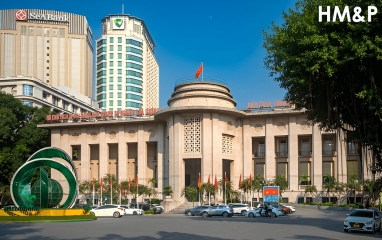
New regulations on purchase of shares in Vietnamese credit institutions by foreign investors take effect from today
From May 19, 2025, Decree No. 69/2025/ND-CP amending and supplementing the Government's Decree No. 01/2014/ND-CP on foreign investors buying shares of Vietnamese credit institutions (CIs) officially takes effect. This is an important adjustment step to attract foreign capital, support the restructuring process of the banking system, and at the same time ensure the safety and stability of the national financial system.
The distinct roles of law firms and securities companies in the private placement of corporate bonds
In recent years, corporate bonds, particularly privately placed corporate bonds, have emerged as a vital capital mobilization channel for Vietnamese enterprises. However, this process is not merely a financial transaction but a legally and technically complex procedure requiring the involvement of various professional entities, among which law firms and securities companies play prominent roles. This article provides a detailed analysis of the differences in roles, responsibilities, scope of work, and the value these two types of entities bring to a bond issuance transaction.
The role of law firms in the private placement of corporate bonds
In the context of tightened credit conditions and increasing demand for medium and long-term capital mobilization, privately placed corporate bonds have emerged as a critical source of funding for enterprises to expand production, restructure capital, or implement large-scale investment projects. Professional law firms play a pivotal role—not only in ensuring regulatory compliance but also in advising on optimal issuance structures, mitigating legal risks, and safeguarding the interests of the issuer throughout the offering process. This article provides an overview of the role of law firms in private placements of corporate bonds from both regulatory and practical perspectives.
Why does the Government continue to propose amendments to the Law on Investment 2020?
Vietnam's Investment Law 2020 has served as an important foundation in shaping the country's investment landscape, promoting economic growth and integration with global trends. However, as Vietnam faces the complex challenges of a rapidly changing global economy, technological advancements, and domestic development priorities, the Government has recognized the need to amend this law.
Legal status of foreign bank branches in Vietnam
The expansion of Vietnam's financial market is a testament to international integration when foreign banks have been tending to expand their operations in Vietnam, and the expansion of foreign bank branches in Vietnam has become an inevitable trend. However, the shapingof the legal way of branches of foreign banks operating in the Vietnamese financial system poses many issues related to the rights and obligations of these organizations, especially the legal status in legal relations, including procedural activities.

.png) +84 28 7308 0839
+84 28 7308 0839.png)
 hmplaw.vn


