


The National Assembly's approval of amendments and supplements to the Corporate Income Tax Law (CIT Law) on November 20, 2026, marks a notable shift in policies supporting small and medium-sized enterprises (SMEs) in Vietnam. Instead of being only regulated in special mechanisms and policies for private economic development, the three-year corporate income tax exemption incentive for newly established SMEs has been directly incorporated into the CIT Law, thereby strengthening the legal basis for applying this policy.
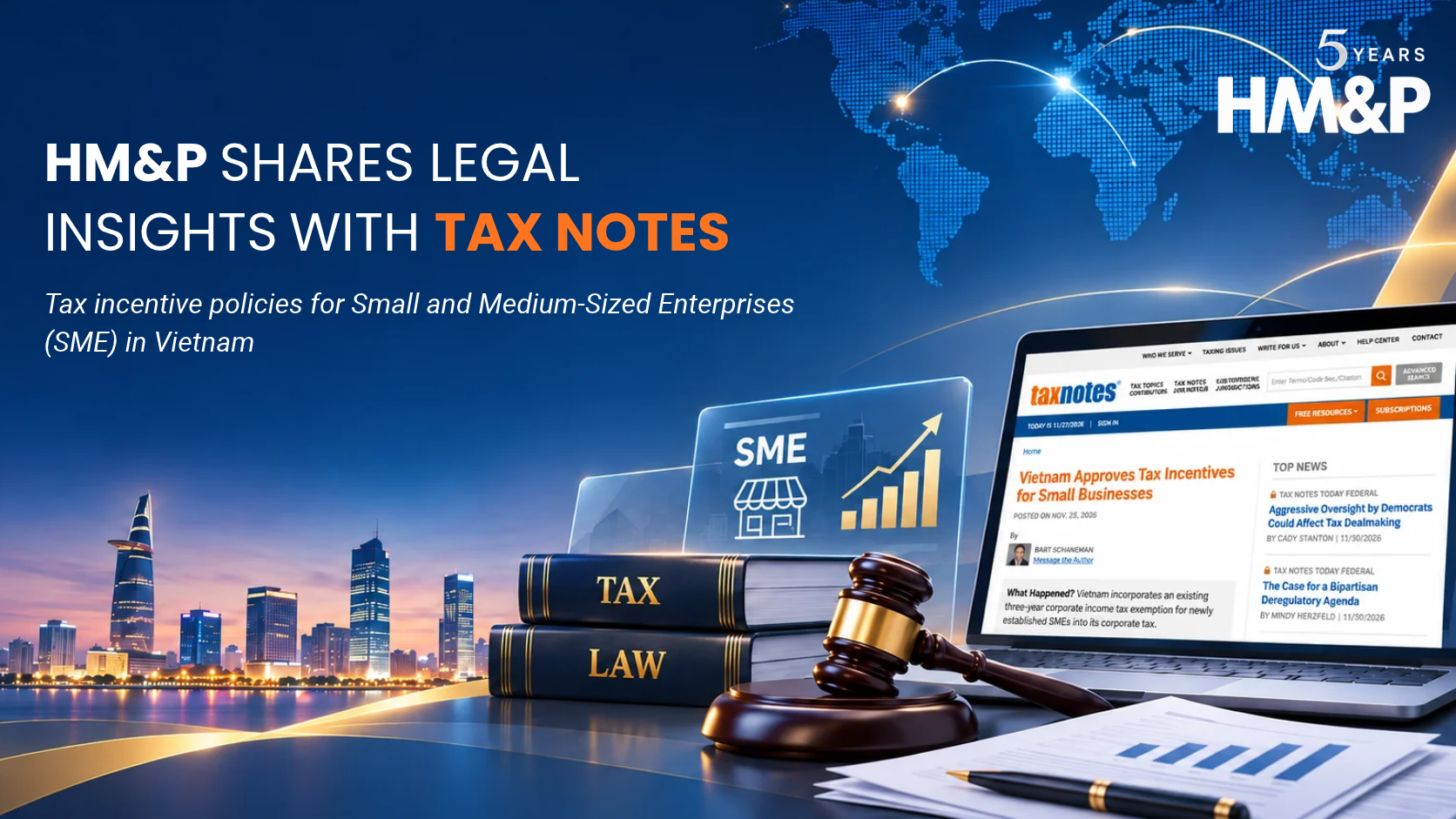
In an interview with Tax Notes, a specialized tax publication from the United States, during the preparation of the article "Vietnam Approves Tax Incentives for Small Businesses" published on November 25, 2026, on Tax Notes Today International, Managing Partner Nguyen Van Phuc, representing HM&P Law Firm ("HM&P"), shared his assessments on the significance of the amendment, the ability of foreign-invested enterprises to access incentives, as well as issues that may arise in practical application.
Strengthening the legal basis for tax incentive policies for SMEs
According to Lawyer Phuc, the significance of this amendment lies more in the legal basis and potential scope of the policy, rather than in the level of tax incentives. Previously, Resolution No. 198/2025/QH15 and Decree No. 20/2026/ND-CP stipulated a corporate income tax exemption mechanism for three years from the date SMEs were first granted their Enterprise Registration Certificates. The amended law continues to maintain the duration and start date of tax exemption, while directly supplementing this policy into Article 4 of the CIT Law.
One issue that Lawyer Phuc particularly noted is the ability of foreign-invested SMEs to access incentives. During the application of previous regulations, there were differing interpretations regarding whether foreign-invested enterprises were eligible for private economic development support policies. Although the Ministry of Finance later clarified that these enterprises can enjoy incentives if they fully meet the statutory criteria and conditions, including the policy in the CIT Law will help limit differences in interpretation and application, as the new regulation does not clearly distinguish between domestically invested SMEs and foreign-invested SMEs.
Lawyer Nguyen Van Phuc shared:
"In our view, the most important change is not to introduce a new tax exemption policy, but to transform an existing special incentive mechanism into a more widely established component within Vietnam's CIT system."
In addition to the tax exemption policy, this amendment also adds regulations on deductible expenses when determining taxable income for large enterprises supporting SMEs through human resource training, technical consulting, product development, and technology transfer. This is also part of the SME development orientation by strengthening linkages between enterprises.
Issues to note when accessing preferential policies
Lawyer Phuc believes that access to incentives in practice will significantly depend on the guiding regulations, especially if the current exclusions in Decree No. 20/2026/ND-CP continue to be maintained. Limitations related to the business history of the legal representative, general partner, or the largest capital contribution, as well as cases of establishing enterprises through restructuring, may affect both legitimate investment and business activities. For foreign investors, another issue that needs further clarification is whether previous business activities or ownership interests abroad are considered when determining eligibility for incentives in Vietnam.
The starting date for tax exemption calculation is also a factor directly affecting the actual value of the policy. Since the tax exemption period is calculated from when the enterprise is first granted the Enterprise Registration Certificate, instead of the time taxable income begins, manufacturing enterprises, technology startups, or foreign-invested enterprises may have to allocate a significant portion of the preferential period to complete licensing procedures, build facilities, develop products, and establish business operations. Lawyer Phuc commented:
"Three years of nominal tax exemption does not necessarily mean three years of actual benefits from the policy, especially for businesses with large initial investment needs and longer time to generate profits."
In addition, determining and maintaining the SME criteria throughout the incentive period, especially for enterprises belonging to corporations, having parent companies abroad, or with rapid growth, also needs specific guidance. In the current self-determination tax liability mechanism, inaccurate assessment of incentive eligibility conditions may lead to additional tax obligations, late payment interest, and risks of administrative penalties.
According to Lawyer Phuc, the effectiveness of this amendment will depend on the ability to distinguish between substantive business activities and enterprise structures established mainly to benefit from taxes. Preventive regulations for exploiting incentives need to be designed appropriately so as not to unintentionally become barriers to startup activities, business expansion, and foreign investment – activities that this policy aims to encourage.
Through this exchange with Tax Notes, HM&P has had the opportunity to share perspectives from Vietnam's legal practice with the international tax and investment expert community. This is also an opportunity for issues arising during the implementation of policies for SMEs in Vietnam to be viewed from a broader perspective, especially in the relationship between tax law reform, business development, and attracting foreign investment.
Read more: Vietnam Approves Tax Incentives for Small Businesses


