


An inspection conducted at two or three a.m. at a factory in an industrial park can surprise many businesses. What the authorities are interested in sometimes is not the production line operating or has stopped operating, but the detection of the contractor's workers or engineers sleeping in the factory area. This practice is quite common in manufacturing enterprises, especially in the electronics, mechanical, chemical or energy industries, where maintaining personnel ready to handle problems is considered a solution to ensure the continuity of production activities.
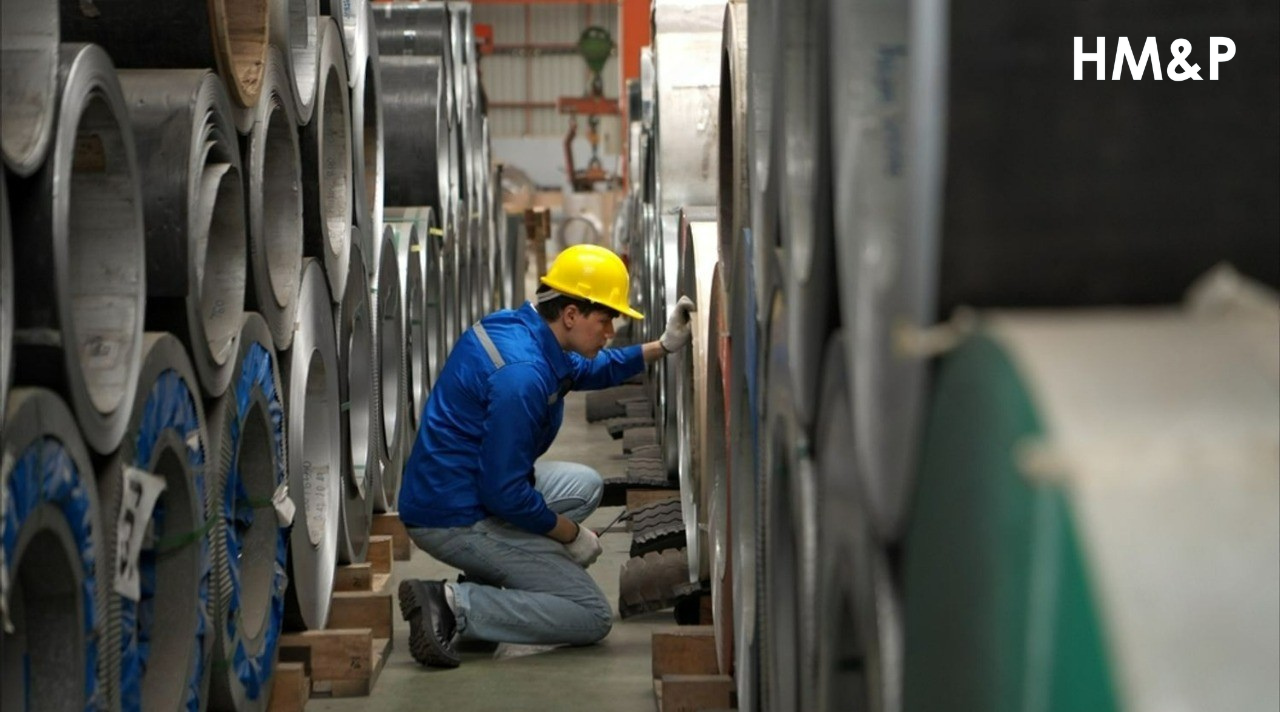
In fact, there is no legal document that uses the language of an absolute ban on the presence of workers in factories at night.
However, what many businesses still consider a reasonable operating solution is becoming a noteworthy legal issue. Not because Vietnamese law has issued a regulation that absolutely prohibits workers from staying overnight in factories, but because the presence of people in the production area is governed simultaneously by many different legal fields. When regulations on industrial park management, residential, fire prevention and security are applied to a situation, a seemingly purely human resource management decision can entail legal risks that businesses have never anticipated.
There is no law prohibiting it, but there is also no "legal gap"
One of the common views is that Vietnamese law does not stipulate "prohibiting sleeping in the factory", so enterprises can actively arrange employees to stay overnight if necessary. This interpretation reflects a part of the legal regulation but ignores the way the legal system is regulating this issue.
In fact, there is no legal document that uses the language of an absolute ban on the presence of workers in factories at night. However, that does not mean that businesses have the full right to use the factory as a place to stay.
When considering the legality of arranging for overnight stayers, regulators often don't just question whether people stay overnight. What they are interested in is what function the building is designed for, whether the arrangement of people to stay will change the purpose of using the building, whether the area meets the requirements for fire prevention and fighting when there are people staying or not, people present at the factory who are doing work or simply staying overnight, etc. at the same time, whether the obligations on residence have been fully fulfilled or not.
In other words, legal risks do not arise from an individual prohibition law, but from the failure of businesses to simultaneously meet the requirements of many groups of legal regulations. This is also the reason why the same act of "staying overnight", but some businesses do not encounter problems, while other businesses may be asked to terminate or be handled for violations.
What the State wants to manage is not "sleeping", but the function of the factory
One of the regulations that has the greatest impact on this issue is Article 25 of Decree No. 35/2022/ND-CP on the management of industrial parks and economic zones.
It is worth noting that this regulation does not phrase in the direction of "prohibiting workers from sleeping in the factory". Instead, the State chooses a different approach: determining where workers can stay in industrial parks and limiting the cases where enterprises can be arranged to stay right at the production facility.
This approach reflects a remarkable management mindset. Factories are built to perform production functions, while living and accommodation activities are oriented to be carried out in buildings planned for that purpose. The clear demarcation between the production area and the accommodation area is not only to ensure order in the industrial park planning but also to associate with the requirements of labor safety, fire prevention and fighting and residence management.
This is also the reason why many management agencies today tend to recognize that the arrangement of people to sleep regularly in factories is not in accordance with the management orientation of the law.
Legal boundaries lie in the purpose of presence
In practice, the most complicated issue is not determining whether workers will stay overnight, but what they stay for.
If the employee is assigned to work the night shift or shift in accordance with the provisions of the Labor Code, is assigned specific tasks, has working hours, is timed and enjoys the corresponding salary regime, their presence has the nature of an industrial relations. In this case, being present at the factory at night is to perform the work, even if during most of the shift there is no incident to be handled.
On the contrary, if the enterprise does not have a decision on assignment, does not build a duty regime, does not record working hours, and employees only use the factory as an overnight place to "have work to handle", it is very difficult to prove that this is a labor activity instead of a form of accommodation.
This distinction is important because it determines how the regulator assesses the legality of the presence in the factory.
Many businesses think that just calling it a "shift on duty" will automatically be considered a labor activity. However, in the event of an inspection, the name is not the decisive factor. It is important whether the business can prove the existence of a legitimate shift by the actual documentation system and organization.
That is also the reason why many legal experts believe that businesses should not manage night shifts with experience or operating habits, but should consider this as a content of the compliance management system.
Legal risks do not stop at Residence Law
Another mistake is that as long as the notification of stay is fully implemented, businesses will no longer have legal problems. In fact, the residency obligation is just one link in the entire chain of legal requirements.
If a licensed building is a manufacturing factory but is actually arranged with beds, living areas or used as a regular residence, the enterprise may face problems related to the use of the building for improper functions. At the same time, when the factory becomes a place where people stay, the requirements for fire prevention and fighting also change significantly compared to the case where the work only serves production activities. What enterprises need to consider is not only "whether it has been declared or not", but also whether the entire way of organizing its activities is in accordance with the purpose of using the works and the management orientation of the law.
Not only the workers of the enterprise, it is also quite common practice for the expert or engineer of the equipment supplier to stay overnight during the installation, commissioning or maintenance of the line. For many investment projects, especially high-value lines or requiring continuous commissioning, this is almost an objective need to ensure progress and limit technical risks. However, from a legal perspective, these cases require businesses to be more cautious.
If the person present is a foreign expert, the enterprise must not only pay attention to the regulations on industrial park management but also comply with the law on entry, residence and management of foreigners. Meanwhile, if the building is used as a place to stay instead of just a workplace, the requirements for fire prevention and fighting and management of the use of the building are also set at the same time.
That shows that legal risks do not arise from the presence of employees or experts at the factory at night, but from the failure of the enterprise to prove the purpose of its presence and the way of organizing its activities in accordance with the current legal framework.
From post-inspection to compliance management
A notable trend in recent years is that the management method of state agencies is changing markedly.
If in the past inspection activities often focused on handling violations that have arisen, now many localities have switched to a more proactive approach, strengthening inspections of residence, security and order and fire prevention right at enterprises, including outside office hours or at night. The goal is not only to detect violations, but also to prevent risks that may affect production safety and management order. State agencies no longer only evaluate enterprises through legal documents, but increasingly focus on comparing the dossier with the actual use status of the project.
This means that a business that has a full license but does not operate in accordance with the approved function can still face legal risks. In contrast, an enterprise with a clear operating process, complete labor records, and a strictly compliant governance mechanism will have more grounds to explain to the management agency when inspections arise.

In consulting practice, it is easy to see that many businesses still approach this issue from an operational perspective instead of legal governance.
The problem is not in "how people stay" but in "how the business is organized"
In consulting practice, it is easy to see that many businesses still approach this issue from an operational perspective instead of legal governance.
When the production line is at risk of breakdown, the fastest solution is usually to arrange a few personnel to stay in the factory. However, few businesses question whether these people are working a legitimate shift or staying in the production area. This gap is the source of many risks.
If the business really needs to maintain personnel at night, the solution should not be to "put people to sleep", but to design a mechanism on duty in accordance with labor laws and management requirements. That includes clearly defining job positions, promulgating duty regulations, arranging working hours, salary regimes and specific tasks of the person on duty. More importantly, the duty area also needs to be suitable for the function of the project, instead of turning the factory or warehouse into a place of regular living.
For experts and engineers of contractors, enterprises should prioritize arranging accommodation at legal accommodation establishments. In case it is necessary to work through the night to install or commission the equipment, it is recommended to have a written work plan, clearly defining the time, scope of work and the list of personnel involved. These documents not only serve internal management but are also an important basis for proving that the presence at the factory is for the performance of the work and not for the accommodation.
In other words, the same fact that people stay overnight in the factory, but how the business organizes and manages that activity will determine the level of legal risk.
Compliance needs to start from the design of the governance system
It is worth noting that many businesses only review accommodation activities after receiving a request from the police or after an unscheduled inspection. This approach often puts businesses in a passive position, having to deal with many problems simultaneously in a short time.
Therefore, enterprises must regularly assess the conformity between the current use status of the work and legal documents; review the regulations on duty shifts, the process of managing foreign experts and fire prevention and fighting plans; at the same time, update changes in laws and enforcement methods of local management agencies.
The cost of building a compliance system is often much smaller than the costs incurred when a business is forced to adjust its production operations after a violation handling decision or a remedial request from a state agency. More importantly, an effective compliance management system also helps businesses maintain stability in production activities and strengthen the trust of partners, investors as well as regulators.
Conclusion
In the modern production environment, the arrangement of workers or experts to be present at the factory at night is often a legitimate operational need. However, from a legal perspective, the concern is not whether the law absolutely prohibits overnight stays in the factory, but whether the enterprise organizes such activities for the right purpose and in accordance with the current legal framework.
Practice shows that a decision derived from a technical requirement can completely become a legal risk if the business only sees this as a matter of human resource management. On the contrary, when placed in a comprehensive compliance management system, night shift activities, incident response or overtime work can be organized in the direction of both meeting production requirements and ensuring compliance with regulations on labor, industrial park management, etc residence and fire protection.


