


A provision to maintain order in the trial may be necessary. But when the chosen measure no longer stopped at controlling audio and video recording, but changed to prohibiting the bringing of phones, computers and electronic devices into the courtroom, the story was no longer just a court rule. It raises a larger question: how far does the body that issues documents under the law go when "manage" at the same time narrows the rights guaranteed by the Constitution and the law?

It is not difficult to explain the need to control phones, cameras and electronic devices at the trial.
On May 30, 2026, the Supreme People's Court issued Circular No. 12/2026/TT-TANDTC on internal rules of court [1]sessions. One of the notable contents of this document is the regulation on the control of the carrying and use of equipment capable of recording, video, and transceiver signals at court sessions.
Behind such a seemingly technical regulation are not small legal questions. The Court has the right to control the audio and video recording to ensure order, sanctity and adjudication activities. But can a Circular take it a step further to restrict even the carrying of equipment into the courtroom? And more importantly, if such a measure affects the right to access information, the right to the press, and the ability to attend a public hearing, must that limit be set by law or can it be established in writing under the law? This is a problem worth discussing.
From behavior management to vehicle control
It is not difficult to explain the need to control phones, cameras and electronic devices at the trial. A trial cannot be interrupted by the ringing of the telephone; Arbitrary livestreaming[2] can affect participants in the proceedings, private secrets, business secrets or even judicial activities. In certain cases, uncontrolled audio or video recording can also have consequences that go far beyond the scope of the trial. Therefore, setting rules for the use of equipment is well-founded.
But "unused" and "not carried" are two very different levels of intervention.
When the law prohibits the use of phones for illegal recording, the subject of control is a specific act that has the potential to affect the trial. In contrast, when prohibiting a person from bringing a phone or computer into the courtroom without permission, the regulatory measure is pushed one step further: the person is restricted even if he or she has not performed any audio or video recording.
The difference seems small but very important in terms of law.
Today's smartphones are more than just recorders or camcorders. It is also a means of communication, document storage, electronic authentication, and performs a series of routine tasks. Laptops or tablets for lawyers, journalists and many people involved in proceedings can also be a working tool. Smart watches and many personal assistance devices are also increasingly integrated with the ability to receive and transmit signals. If the management criteria are determined by the "ability" of recording, video recording or transceiving, the range of affected equipment can therefore be very wide.
The legal issue therefore no longer lies in the question of whether the Court is entitled to protect the order of the trial. Of course there is. The problem lies in the method and limits of that management right.
To what extent can a Circular restrict rights?
The starting point needs to return to Clause 2, Article 14 of the 2013 Constitution. Accordingly, human rights and citizens' rights can only be restricted in accordance with the provisions of the law in case of necessity for reasons determined by the Constitution such as national defense, national security, social order and safety, social ethics and public health.
This provision contains a particularly important constitutional principle: not any state agency, by any kind of document, can set a new limit on human rights and citizenship on its own.
A text under the law can concretize how to implement a limit that has been established by law. But in principle, it should not become an independent source that creates a restriction of rights that the law has not yet set or given sufficient authority to prescribe. This is the boundary that needs to be considered for the regulation of electronic devices in the courtroom.
The Law on Organization of People's Courts and procedural laws give courts and presiding judges the necessary powers to administer trials, maintain order and handle violators of internal rules. The Criminal Procedure Code, the Civil Procedure Code and the Administrative Procedure Law all establish mechanisms to ensure the order of court sessions. That creates the basis for the promulgation of internal rules. But the authority to promulgate rules does not mean unlimited authority to impose all prohibitions.
If the law grants the right to manage the order of the court hearing, the guiding document can completely stipulate that the telephone must be switched to silent mode, prohibit arbitrary recording, video recording, prohibit livestreaming, regulate the working position of the press or require compliance with the instructions of the Chairman. Difficulties arise when the regulation shifts from controlling how to use equipment to controlling the right to bring equipment into the courtroom.
The question must then be: has the law established this limit? If not, does the law give a specific enough authority for the Supreme People's Court to establish that limit by Circular?
If the answer is unclear, the legality of the provision under the law naturally becomes an issue that needs to be considered.
A public trial is not just a courtroom door that is open
The story is also directly related to the principle of public trial. Clause 3, Article 103 of the Constitution establishes the principle that the Court shall conduct a public trial, except for cases where it is required by law to conduct a closed trial. Procedural laws continue to concretize this principle.
"Public", therefore, does not only carry the physical meaning that people are allowed to enter the courtroom. It also reflects a broader requirement: the judiciary must be able to be observed and monitored by society within legal limits. Here, the right to the press and the right to access information under Article 25 of the Constitution also become noteworthy.
None of these rights are absolute. Recording of a court hearing may be limited to the protection of minors, private secrets, business secrets, witnesses, or to ensure order of the trial. But because rights can be restricted, the basis, scope and extent of restrictions must be even clearer.
A broad ban that applies from the moment the device is brought into the courtroom risks reversing this logic. Instead of identifying what behavior is dangerous and controlling it, the vehicle pre-control regulation is likely to be used to carry out the behavior.
If you argue that phones are capable of recording audio and can be banned from being brought in, in today's digital environment, the scope of the ban is easy to expand. Laptops, tablets, smartwatches, and many other assistive devices are all capable of recording, video, or data transfer.
A statute that restricts rights but has a wide scope of subjects also creates the problem of uniform determinism and applicability.
Necessity is not enough, it must also be considered proportionality
Even if the goal of ensuring court order is acknowledged as legitimate, there is still another question: is the measure chosen really necessary and commensurate with that goal? This is a notable weakness of the "no carrying" approach.
If the risk to be prevented is illegal audio and video recording, why not directly ban that behavior?
If the risk is livestreaming, it can be banned.
If the phone causes disorder, it may be asked to turn off the ringer or go into silent mode.
If a special case requires strict control of electronic equipment, it is possible to establish a separate measure based on the nature of the case and the decision of the competent person.
These solutions all have a direct impact on the risk to be controlled, but are less restrictive than prohibiting the device from the moment of bringing in the device. That is also why the principle of proportionality makes sense. When there are many measures that achieve a legitimate goal, state agencies should choose solutions that are less infringing on rights.
A broad ban would also have practical consequences that may not have been fully calculated. Lawyers can keep records and notes on a computer. Journalists need equipment to work. Court attendees may need a phone call for work or family reasons. People with disabilities can use electronic devices as an assistive tool.
A regulation that seems to apply equally to all can therefore create very different impacts on each group of people.
The gap between regulation and enforcement
There is another problem that usually only appears when the text is put into practice.
If a device is not allowed to be brought into the courtroom, who has the right to check whether a person is carrying a device or not? How far is the inspection done? Where should the device be sent? Who is responsible if it is lost or damaged? Will a person who does not agree to hand over the phone be denied entry to a public court hearing? More importantly, what are the criteria for the Chairman to allow or not to allow?
If these issues are not defined well enough, a rule intended to re-establish order could open up considerable space for discretionary application.
This is something that needs to be especially cautious in the field of justice. Because the power to administer the trial is necessary, but the more power directly impacts the public's ability to access the trial, the more transparent and predictable the implementation criteria need to be.
The sanctity of the Court is not the opposite of publicity. On the contrary, belief in the judiciary is also created by society's ability to see that judicial power is exercised according to clear rules.
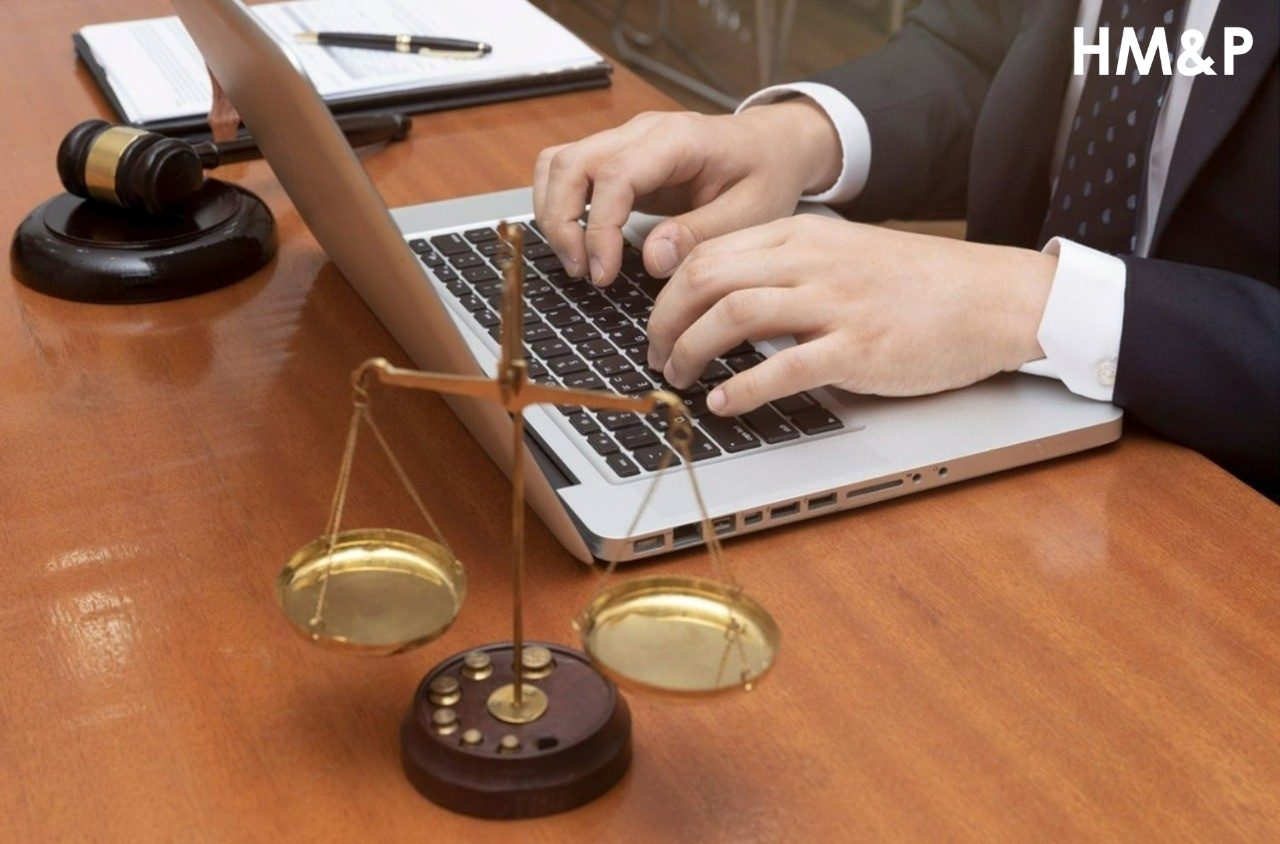
The debate over a phone or laptop in a courtroom is, more broadly, an argument about a fundamental principle of the rule of law.
What needs to be fixed is not the goal, but the normative design
Therefore, the problem of regulations on audio and video recording equipment does not necessarily lie in the goal that the Supreme People's Court wants to achieve.
Protecting court order, privacy, legally protected secrecy and independence of judicial activities are all legitimate goals. What is worth considering is how to design a legal tool to achieve those goals.
A more reasonable option is to shift the focus from "prohibition" to "managing use".
Accordingly, participants can bring phones and electronic devices into the courtroom but must leave them in a noiseless mode and are not allowed to arbitrarily record, video, broadcast or transmit data on court proceedings when the law or the Presiding Judge does not allow it. Cases requiring special protection may apply stricter measures on the basis of the law.
For the press, there should be a separate and clear mechanism on operational registration, the time of recording and the necessary limits to balance the right to the press with the request for trial.
Exceptions for lawyers, participants in electronic proceedings and people who need assistive devices also need to be clearly identified instead of relying entirely on permission in each case.
In the long run, if the State truly believes that the carrying of certain types of equipment into the courtroom must be restricted for particularly important interests, that limit should be stipulated or empowered sufficiently clearly at the legislative level, rather than leaving a Circular to itself the function of setting limits on rights.
The limit of the text under the law is also the limit of power
The debate over a phone or laptop in a courtroom is, more broadly, an argument about a fundamental principle of the rule of law.
A state agency may pursue a perfectly legitimate regulatory goal, but the right goal does not automatically make every selected vehicle legal. The right goal is no substitute for authority. Convenience in management is also not a substitute for the requirement of necessity when the rights of individuals are restricted.
Clause 2, Article 14 of the Constitution has the main meaning at this point. When the Constitution requires human rights, civil rights can only be restricted "in accordance with the law," which is not just a matter of legislative techniques. It is a limit to the state power itself.
A court rule can be strict. But it should not be for the convenience of management to shift the boundaries of rights established by law.
When a new limit is likely to directly affect the public's right to attend court hearings, press activities, conditions for exercising procedural rights and access to judicial activities, the basis for such limitation needs to come from the law or a sufficiently clear empowerment of the law. rather than being created for the first time at the Circular level.
That is also the boundary that needs to be preserved if the principle of the rule of law not only exists in the Constitution, but must also be present in each specific provision of the law.
Lawyer Nguyen Van Phuc
HM&P Law Firm
[1] https://vbpq.toaan.gov.vn/webcenter/portal/htvb/chi-tiet?dDocName=TAND378666&Keyword=, accessed on 2026/08/17.
[2] A form of live broadcasting through social networking sites such as facebook, tiktok, youtube.


