


In the increasingly competitive legal services market, advertising helps law firms reach clients and demonstrate their capabilities. But unlike the promotion of ordinary goods, the communication of legal services is simultaneously governed by advertising laws and lawyers' ethical standards. The problem is not how much advertising, but what to announce, what to prove and whether to maintain professional trust or not.

However, it is necessary to distinguish between advertising needs and advertising obligations.
Does a law firm need advertising?
Personal reputation, professional relationships, and client referrals have long been important channels for the development of lawyers' work. However, these channels are no longer the only way for clients to identify and choose a law firm.
As investment, transaction, and legal compliance activities become complex, clients need clearer information about the capabilities and experience of their consultants. Competition among practitioners also makes professional communication a real need.
A law firm with good expertise but little known may still miss out on the opportunity to reach the right clients.
For clients, especially foreign enterprises investing in Vietnam for the first time, choosing a law firm usually starts from publicly accessible information: website, portfolio, professional articles, independent assessments or the presence of lawyers in the media. Therefore, proper promotion also helps clients reduce information asymmetry: know what field the law firm practices in, what experience it has and how suitable it is for their needs.
However, it is necessary to distinguish between advertising needs and advertising obligations. Vietnamese law does not set a general requirement forcing law firms to advertise their services. This is a right and an option in the business development strategy.
The issue is not whether the law firm is advertised or not, but how to advertise it both effectively and without degrading the honesty and dignity of the legal profession.
Advertising legal services is not a prohibited activity
Many people still believe that lawyers are not allowed to advertise because of the specificity of their profession. This view easily leads to confusion between the right to refer services and the moral limits when exercising that right.
Current legislation does not impose a general advertising ban on legal services.
According to the Law on Advertising 2012, amended and supplemented by Law No. 75/2025/QH15 effective from January 1, 2026, advertising is the use of means to introduce to the public products, goods and services with or without profit purposes, and organizations and individuals trading in such products, goods and services, except for some cases prescribed by law.
Legal services provided by law firms are not in the group of services prohibited from advertising under Article 7 of the Law on Advertising. Therefore, in principle, law-practicing organizations are allowed to carry out advertising activities in accordance with the law.
Notably, the Code of Ethics and Professional Conduct for Vietnamese Lawyers, issued together with Decision No. 201/QD-HDLSTQ dated December 13, 2019 of the National Bar Council, also does not prohibit lawyers from advertising.
On the contrary, Rule 32 directly regulates this activity, requiring lawyers not to provide false or misleading information, to be responsible for commitments to service quality and not to advertise to affect the honor and reputation of the lawyer team and the legal profession.
Thus, advertising legal services is subject to two layers of requirements: compliance with the advertising law and meeting the ethical standards of the lawyer profession. Because practice shows that a message in advertising activities may not have enough grounds to determine a violation of the advertising law, but there are still potential risks to professional standards.
For example, the way the media deliberately amplifies legal risk to pressure clients to use the services of a law firm can damage trust, although the assessment of the specific violation depends on the content and circumstances.
The line between onboarding competencies and misleading advertising
The most common risk lies in information that cannot be verified or easily misleads customers about actual competence.
According to Article 8 of the Advertising Law, the law prohibits improper or confusing advertising about the business ability, ability to provide products, goods and services of business organizations and individuals and related contents.
It is often difficult for clients to assess the quality of advice before using the service; therefore, the accuracy of the promotional information is even more important. A law firm can introduce the field of practice, professional experience, lawyers, typical clients, awards or transactions involved. However, this information must be accurate, verifiable and disclosed within the appropriate scope.
Introducing M&A consulting experience is different in nature with claiming to be the "best M&A law firm in Vietnam": the first information can be verified by a suitable work profile; the second information is a comparative statement that needs a corresponding basis to prove it.
Not every promotional comment can be defended by generic introductions or subjective evaluations of the law firm itself.
In particular, Article 8 of the Advertising Law sets limits on the use of words such as "best", "only", "best", "number one" or words with similar meanings when there are no legal documents to prove it according to regulations.
Pronouns such as "number one", "best" or "only" should be specifically examined for evidence and expression; phrases such as "top" should also be used with caution to avoid misunderstanding.
Similarly, a law firm can introduce awards, titles or ranking results published by independent organizations. However, it is necessary to accurately identify the awarding unit, the year of recognition, the honored field and the recipient.
An award for an individual lawyer does not automatically become a law firm award. A title given in a professional field does not necessarily mean recognition for the entire field of practice.
An award has media value only when it is presented to the right audience, scope and time of recognition.
Can't advertise with a firm promise of results
Legal services cannot be judged by the final result alone, because that result often depends on the evidence, the behavior of the parties and the decision of the competent authority.
In disputes, licensing procedures or investment transactions, lawyers can control the quality of their work but cannot decide on their own all the factors that lead to the outcome. Therefore, messages such as "100% commitment to winning the lawsuit", "guaranteed to be licensed" or "sure to successfully resolve all disputes" have significant legal and ethical risks.
Rule 32.1 requires solicitors to be held accountable for their commitments in advertising about service quality. This does not mean that solicitors can at their discretion ensure outcomes that are beyond their control.
It is necessary to distinguish the commitment to quality and implementation process from the guarantee of results beyond the control of lawyers.
The law firm may commit to the deadline for responding, the proper staffing, the confidentiality of information, or performing the work with due care and professional responsibility. These are obligations that can be carried out and controlled. In contrast, securing a favorable ruling or an approval decision by a state agency is something that lawyers cannot decide on their own.
Instead of promising a solid outcome, the law firm should demonstrate its ability to analyze, identify risks, and protect the legitimate interests of its clients.
Advertising must not be traded for customer secrets
Consulting records and client lists are persuasive communication materials, but they are also a place where security risks are susceptible.
Having been involved in a transaction or dispute does not automatically give the law firm the right to disclose the client's name, transaction value or the contents of the dossier. The right to refer competencies must be set within the limits of confidentiality obligations and agreements with clients.
According to Article 25 of the Law on Lawyers and Rule 7 of the Code of Ethics and Professional Conduct of Vietnamese Lawyers, lawyers are obliged to keep confidential information about cases and clients that they know in the course of practicing their practice, except for cases permitted by law or professional rules. Therefore, before disclosing the client's name, transaction value, disputed content, consultation results or related documents, the law firm must assess the confidentiality obligation and determine the legal basis for the disclosure.
Even if information about a case has appeared in the press, it does not mean that the law firm is free to confirm the lawyer-client relationship or disclose additional information obtained in the course of providing services.
The use of images, comments or identifying information of customers may also give rise to requirements related to privacy and protection of personal data.
With the legal profession, retaining the trust of clients is more valuable than a promotional message that attracts momentary attention.
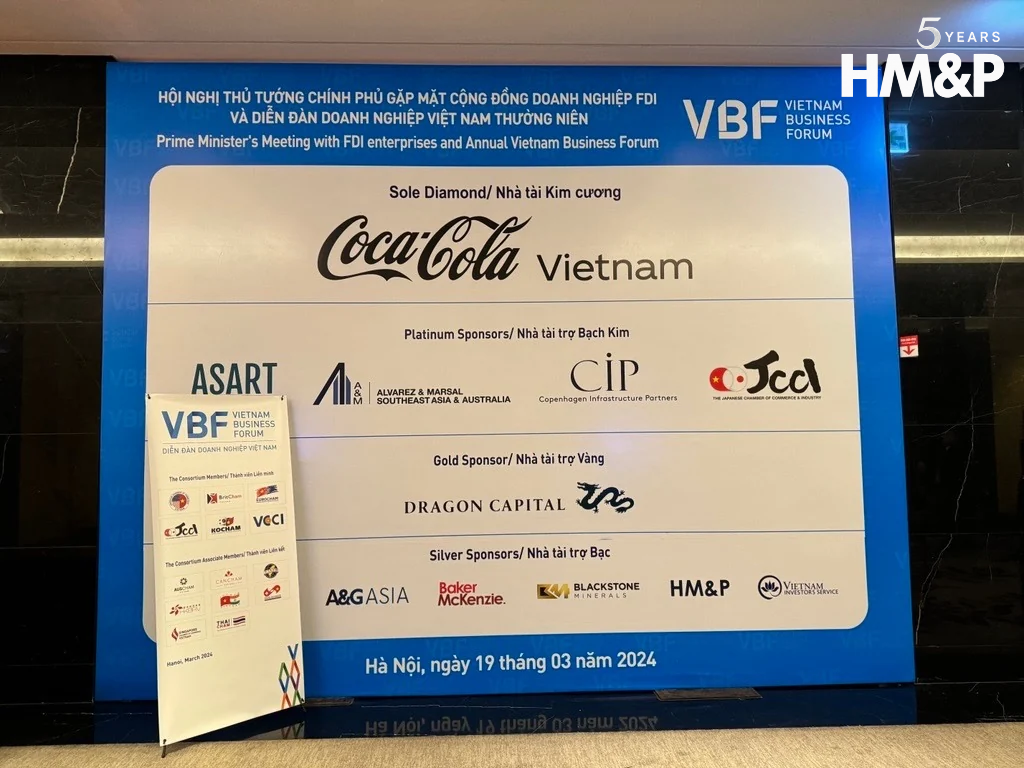
In the digital environment, an unsubstantiated statement can spread before it is corrected
Websites, social networks and online advertising: new spaces, new responsibilities
Websites, social networks, search engines, and video platforms significantly expand customer reach, and make promotional information spread faster and harder to retrieve.
However, not all communication activities on these platforms are advertising by default. An academic legal analysis, a policy update newsletter, and a paid content to attract customers can be of different nature and purpose.
The determination of a content that falls under the scope of the advertising law needs to be based on the nature, purpose and way of expression, rather than just relying on the name used by the law firm.
The amended Law on Advertising in 2025 and Decree No. 342/2025/ND-CP have supplemented and concretized the requirements for online advertising activities. Accordingly, law firms need to pay attention to the transparency of advertising content, the responsibilities of participants and the compliance with technical and management requirements corresponding to the selected form of advertising.
In particular, when using influencers, media units or advertising service providers to introduce legal services, law firms cannot consider hiring a third party as a basis for excluding responsibility for the information provided or approved by them.
On the other hand, Rule 31 requires lawyers when providing information to the press, using the media and social networks to ensure truthfulness, accuracy and objectivity.
A lawyer commenting on a case that is of public interest needs to clearly distinguish between legal judgment, verified information, and personal speculation. Taking advantage of the case to attack colleagues, create false public opinion, or promote oneself can give rise to career risks.
In the digital environment, an unsubstantiated statement can spread before it is corrected; therefore, the content checking process must precede the speed of posting.
The most effective advertising is to prove professional competence
If it is not possible to convince the client with firm promises of results, what does the law firm need to show the market? The answer is competence proven by knowledge, experience, and approach to the problem.
Instead of focusing on self-respecting messages, law firms can build their brand through in-depth analysis, research on legal issues in business activities, policy commentary, organizing seminars or providing information to help businesses identify and prevent risks.
The value of this approach lies not only in its ability to market, but also in helping businesses identify legal risks before disputes arise.
An article that properly analyzes the legal nature of the problem, points out gaps in application practice and proposes possible solutions can build trust much more effectively than a message affirming that the law firm is the best unit.
Of course, knowledge sharing activities also need to be carried out cautiously. Widely publicized legal contents should distinguish between general reference information and advice for a specific case, because the same legal provisions can lead to different consequences depending on the circumstances of each case.
More importantly, the advertisement must reflect the actual capacity. A law firm should not introduce areas of expertise that it does not have enough personnel or experience to provide services responsibly.
A sustainable reputation doesn't form from the number of ad reaches, but from the consistency between what the law firm publishes and the quality of customer service it actually receives.
Don't let advertising detract from the value of the legal profession
Advertising is not contrary to the ethics of the lawyer's profession; what should be avoided is turning a competence introduction into an unfounded promise or trading professional obligations to attract clients. Law firms have the right to introduce services and compete to develop clients, but must ensure that the content is honest, verifiable and respects confidentiality obligations.
In the long run, the most valuable competition lies not in the message that makes the most impression, but in the advisory capacity and the level of trust that the law firm creates. Because advertising can make clients know about a law firm; but only professional quality and integrity will make them choose and continue to trust.


